
Disclosure: This article contains affiliate links. If you sign up through them, we may earn a commission at no extra cost to you.
Language apps take very different approaches: structured courses, audio lessons, games, AI conversation, or live tutoring. This guide helps you narrow the list by the kind of practice you want. If you already know which language you’re after, see our guides to the best apps to learn Spanish and the best apps to learn French.
How we researched this guide: In October 2026, we checked each company’s current product and help pages for languages, access, platforms, guarantees, and the features described below. The screenshots and personal observations from the original review are historical, not a fresh hands-on test; where a current fact could not be confirmed, we removed or qualified it.
Options by goal
- Structured copying before conversation: Copycat Cafe
- Free, gamified course access: Duolingo
- Open-ended AI conversation: Langua
- Grammar explanations and structured lessons: Babbel
- Audio-first lessons: Pimsleur
- Live one-to-one tutoring: Preply
Here is how the ten apps compare at a glance, then I break each one down below.
| App | Practice emphasis | Free to start? | Type |
|---|---|---|---|
| Copycat Cafe | Speaking practice with AI feedback | Card-backed 7-day free trial | Paid subscription |
| Pimsleur | Hands-free audio | Free lesson + 7-day trial | Subscription |
| Langua | Open AI conversation | Limited free tier | Freemium |
| Busuu | Structured courses | Complete courses in the free tier | Freemium |
| Mondly | Fun, gamified lessons | Limited free version | Freemium |
| Babbel | Grammar and structure | First lesson of each course free | Subscription |
| Duolingo | A free daily habit | Yes; paid tiers add features and remove ads | Free + premium |
| Memrise | Vocabulary with native-speaker video | Free access available | Freemium |
| Preply | 1-on-1 tutoring | Paid; replacement trial lesson if the first tutor is not a fit | Subscription |
| Promova | Structured courses with guided AI speaking | Limited free content and tools | Freemium |
Copycat Cafe
Consider it for: structured dialogue practice, spoken copying, pronunciation feedback, and related AI conversation.
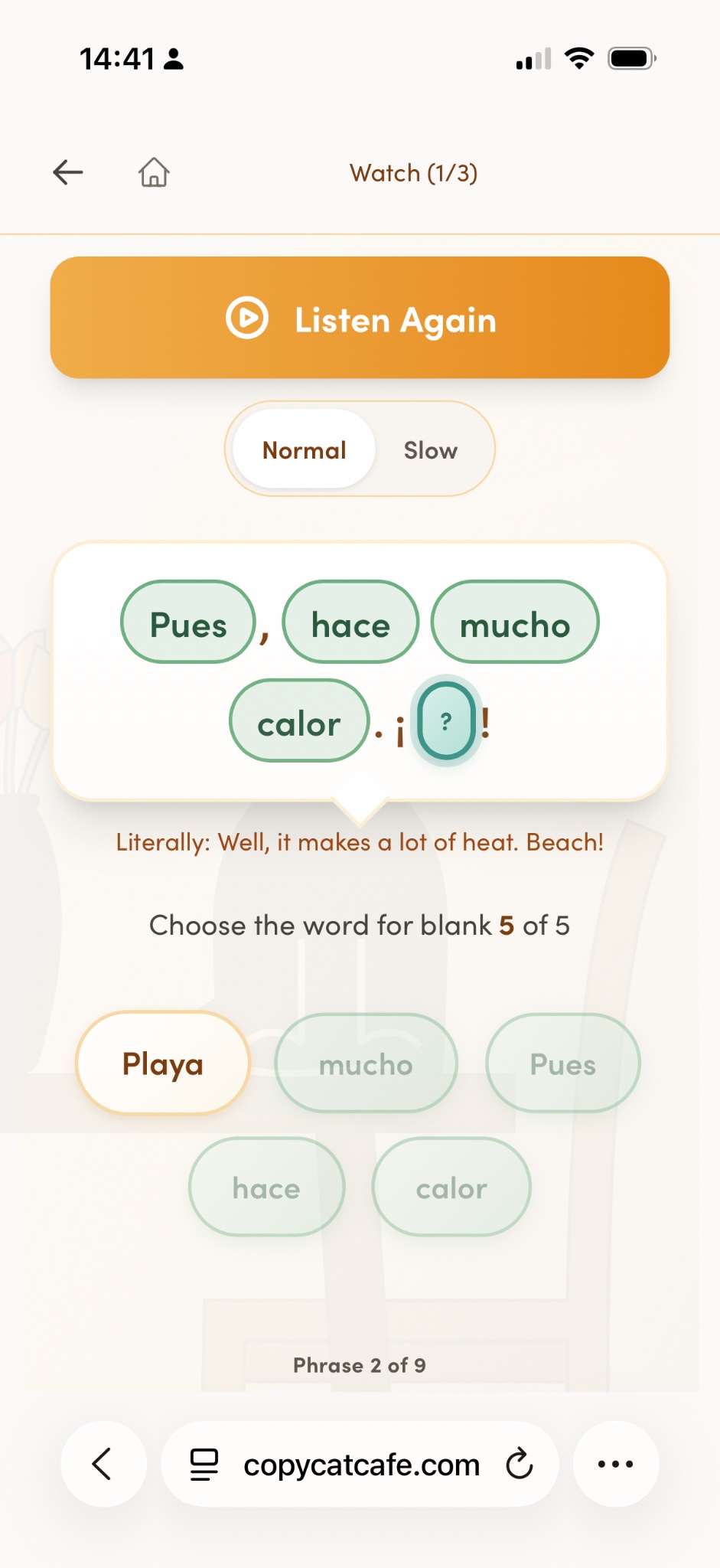
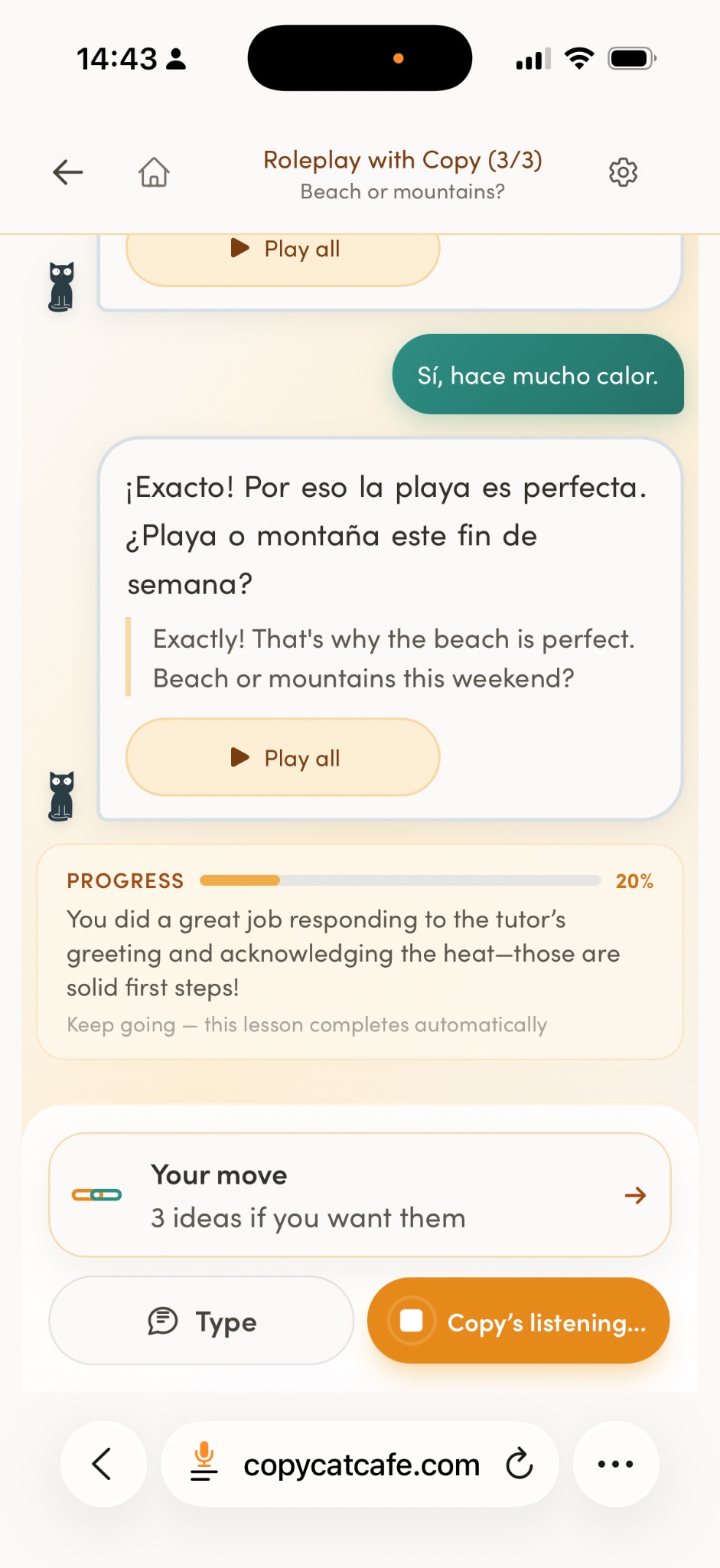
Copycat Cafe offers French, Latin American Spanish, Castilian Spanish, Italian, and German. Its recommended Watch → Copy → Chat progression starts with an everyday dialogue, moves into spoken attempts with pronunciation feedback, and then offers related AI conversation. Learners can also enter and revisit activities independently.
Features and format:
- Copycat Cafe gives a 0–100 pronunciation score and word-level feedback for each recorded take. The score is guidance for that attempt, not a proficiency grade or a guarantee that every assessment is correct.
- The course contains 200 everyday dialogues per language, organised from A1 to B2. That describes the course structure; it does not guarantee that completing it produces B2 proficiency.
- Lessons connect example lines, spoken attempts, review, and AI conversation.
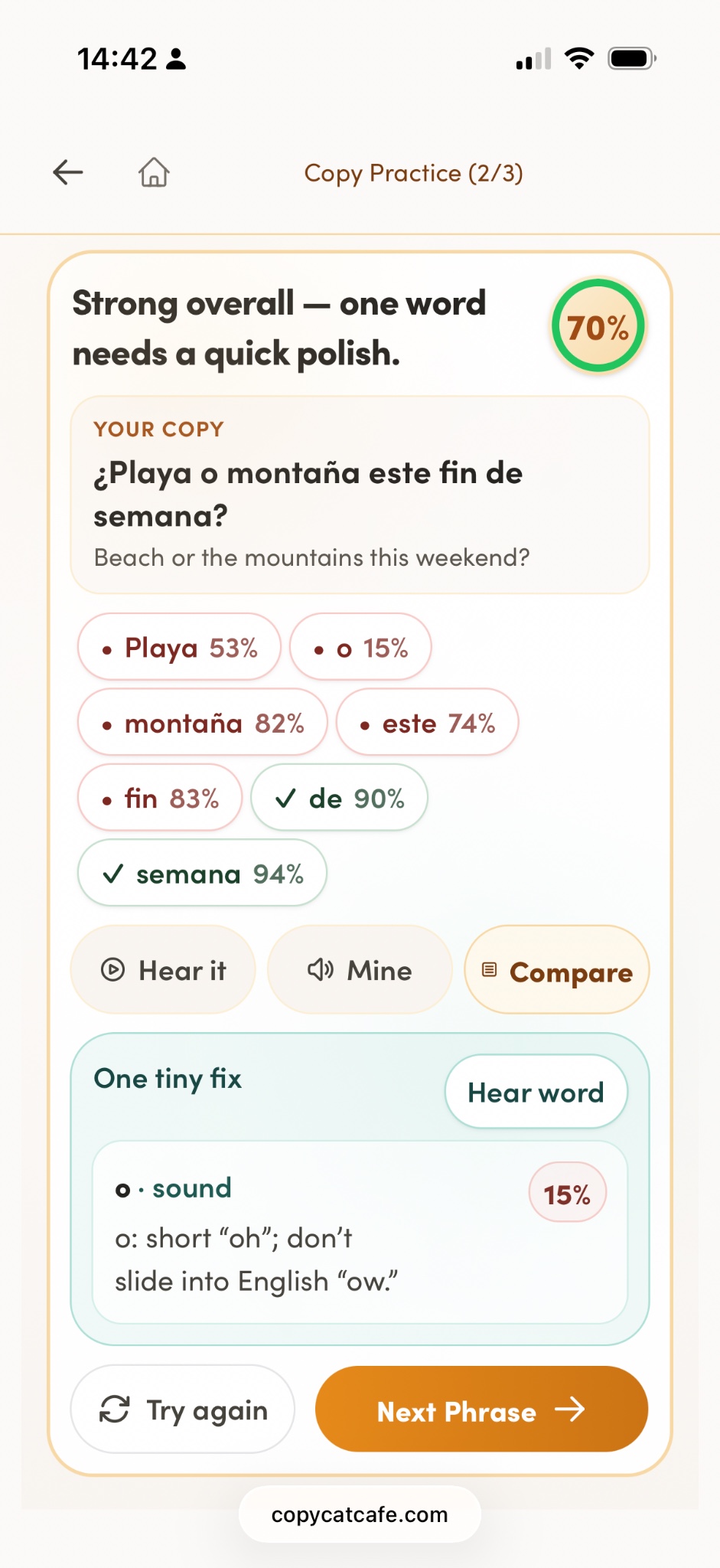
- Lessons include model audio at normal and slow speeds.
- You can adjust the dialogue playback speed.
- Copycat Cafe offers structured lessons that align with the Common European Framework of Reference for Languages (CEFR).
- Lessons include explanations of the words and phrases in context.
Tradeoffs:
- Copycat Cafe is currently a web app that works in supported desktop and mobile browsers.
- The app currently offers French, Latin American Spanish, Castilian Spanish, Italian, and German.
- Check the course languages and practice format before choosing; it is not a broad tutoring marketplace.
Languages: French, Latin American Spanish, Castilian Spanish, Italian, and German
Cost: Copycat Cafe’s Start copying — 7 days free requires a payment card and becomes a paid subscription unless you cancel. Current prices and billing periods are shown before checkout. The 30-day money-back guarantee covers the first paid subscription charge when requested through support within 30 days.
Pimsleur
Consider it for: audio-first lessons and spoken recall you can use on a commute or a walk.
The Pimsleur app centres audio lessons and spoken recall. Current subscriptions also include reading and interactive exercises, with a hands-free mode for audio practice away from a screen.
Features and format:
- Pimsleur’s current product page describes 30-minute Core Lessons, reading lessons, AI Voice Coach pronunciation feedback, flashcards, Speak Easy role-play, offline listening, and a hands-free driving mode. Availability can vary for English-as-a-second-language courses.
- The audio-first format is designed for listening and spoken responses, with written and interactive practice available alongside it.
- Available on the web, App Store, and Google Play.
- Its All Access offer covers 51 languages.
- Voice Coach provides pronunciation feedback, and recorded responses can be replayed.
Tradeoffs:
- Pimsleur is paid after its free lesson or trial, so compare the current checkout price with how often you expect to use its audio-first format.
- Core Lessons emphasise listening and speaking, although current subscriptions also include reading and interactive practice.
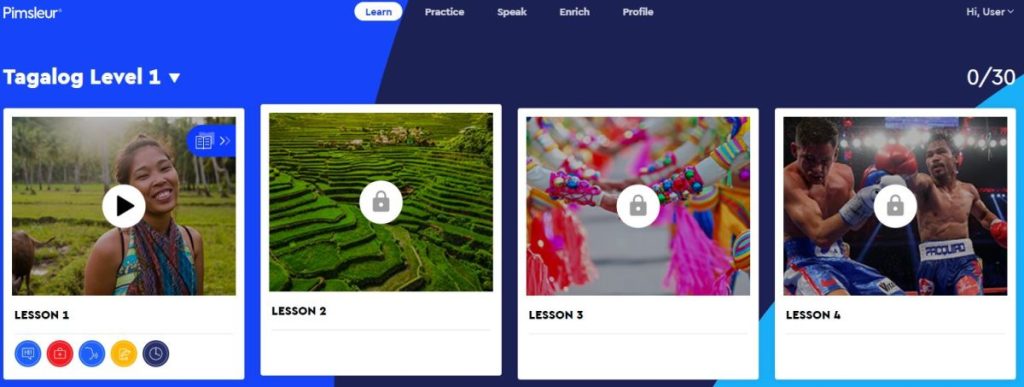
- The Tagalog translation shown in the legacy screenshot was reported during the original review; it was not rechecked in the current product.
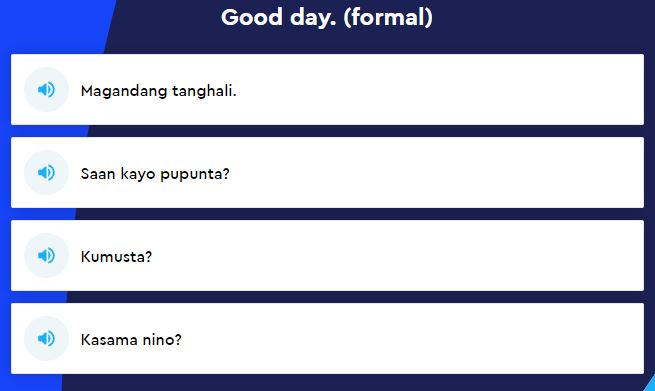
Languages: 51 languages including Chinese, Italian, Russian, Vietnamese, Tagalog, German, Romanian, Finnish, and more.
Cost: Pimsleur advertises a free lesson and a 7-day trial. Its All Access offer covers 51 languages; subscription and lifetime-course prices can change, so check the current offer before buying.
Langua
Consider it for: open-ended AI conversation, with beginner scaffolding and broader practice for later levels. See Langua’s product details.
Langua uses AI for spoken or typed conversations, role-plays, feedback, and translations. It also offers a guided A1–A2 course alongside open conversation practice.
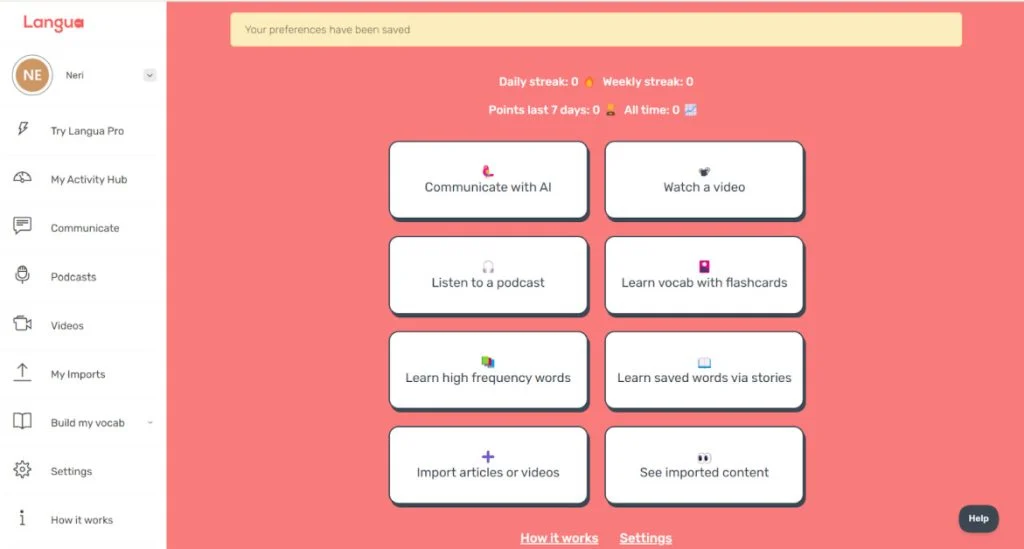
Features and format:
- Call Mode supports hands-free voice conversations, and Langua says its voices are cloned from native speakers.
- The guided beginner course covers A1–A2; open conversation and role-play modes provide less structured practice.
- Conversation replies can include audio, on-screen text, slower playback, and translations.
- The Activity Hub includes additional resources such as videos and podcasts.
Tradeoffs:
- The free account limits Call Mode and chat use; the daily allowances are listed below.
- Open AI conversation is less prescriptive than a fixed lesson sequence, so choose it when that format matches the practice you want.
Languages: 20+ languages including Spanish, French, German, Italian, Portuguese, and more.
Cost: Langua’s free account currently allows 3 minutes of Call Mode per day and about 20 chat messages per week. Standard allows up to 30 call minutes or 75 messages per day; Unlimited removes those limits. Prices are localised and may change. Langua documents a 5-day monthly or 7-day annual card-backed trial and a 30-day money-back guarantee for subscriptions bought on the web or Android, not Apple’s App Store.
Busuu
Consider it for: structured courses plus community corrections and selected AI Conversations.
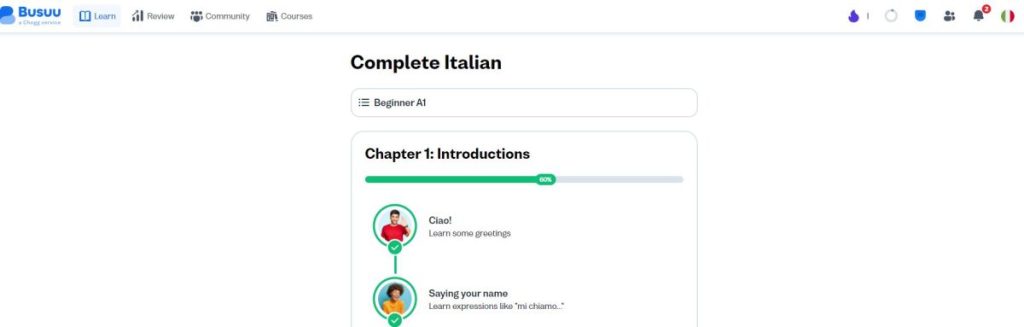
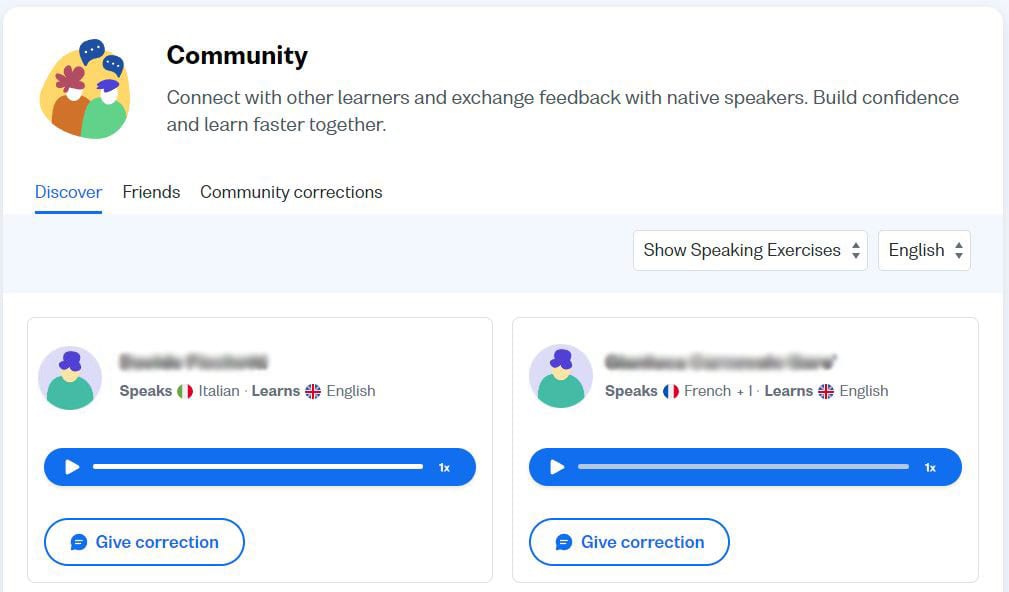
Busuu combines structured courses with exercises that learners can submit to its community for feedback. Its courses cover vocabulary, grammar, reading, listening, and speaking, with endpoints that vary by language.
Features and format:
- The 14 courses align with CEFR; their published endpoints range from A2 to C1.
- Lessons include videos of speakers using course words and phrases.
- Busuu has also added AI-powered Conversations for speaking practice (a Premium Plus feature in the iOS and Android apps), on top of feedback from its community of native speakers.
- Busuu is accessible on the web as well as on Android and iOS devices.
- Community feedback is included in the free tier, along with complete courses and basic progress tracking.
Tradeoffs:
- The 14-language catalog is narrower than those of some other apps in this comparison.
- AI Conversations and pronunciation features require Premium Plus and are available only for selected languages, levels, and devices.
Languages: 14 languages, with course endpoints varying from A2 to C1.
Cost: Busuu’s free tier includes the essential course, Community feedback, basic progress tracking, and complete courses. Premium adds review tools, offline mode, no ads, certificates, and lesson skipping; Premium Plus adds selected AI Conversations and pronunciation features. Prices vary by platform, offer, and local currency.
Mondly
Consider it for: short, gamified lessons across a broad language catalog. See Mondly’s product details. See Mondly’s free and paid plans.
Mondly provides short lessons with speaking, listening, writing, and voice-recognition exercises. Its current catalog covers 41 languages, while the free version includes daily lessons and challenges rather than the full Premium library.
Features and format:
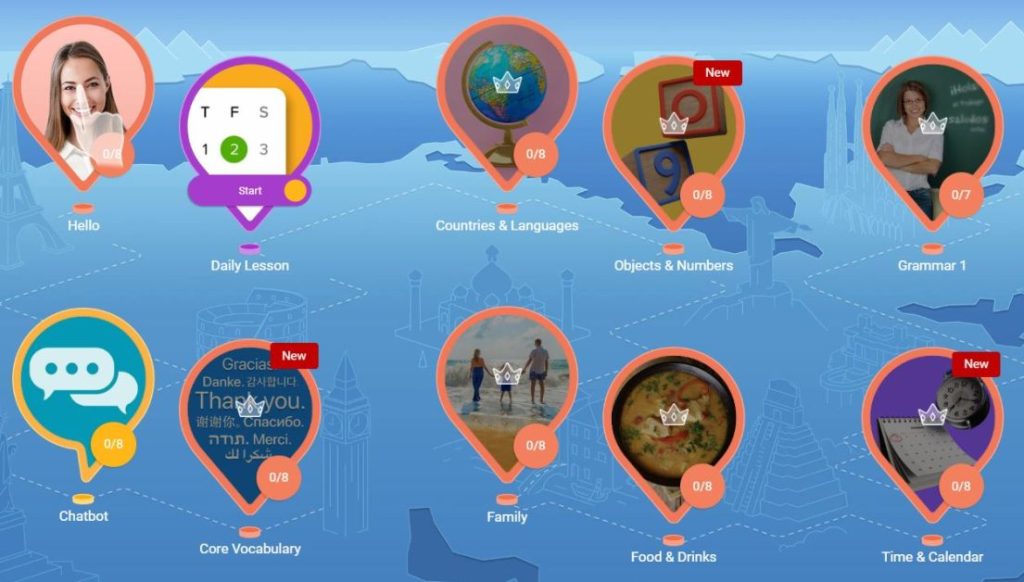
- The lesson map presents topics and progress visually.
- The catalog covers 41 languages.
- Exercises include multiple-choice questions, fill-in-the-blanks, spelling, and sentence-building translations.
- You can access Mondly directly through your browser or download the app from the App Store or Google Play.
- There’s also an activity where you can either choose your answer from the options by clicking on it or record your voice to read your answer.
- Lessons pair words with images and audio.
Tradeoffs:
- The free version provides only part of the lesson library.
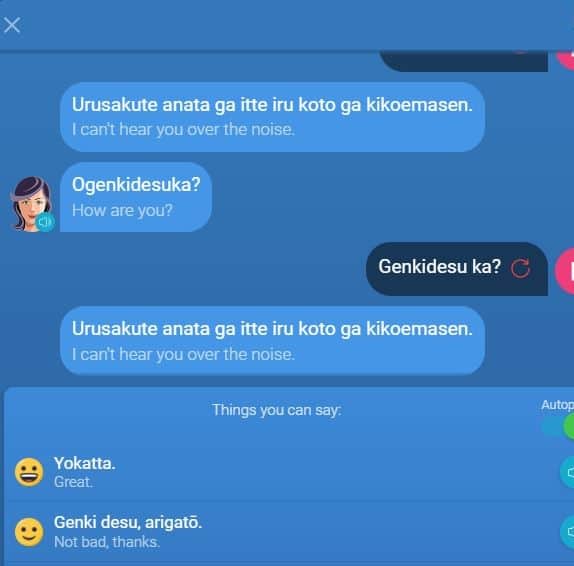
- In the original review, the chatbot used suggested responses and did not translate the learner’s Japanese reply. The adjacent legacy screenshot also recorded an inappropriate “I can’t hear you” response to typed input; these behaviours were not retested in October 2026.
- Mondly’s offers can vary by account, platform, language access, and promotion. Check the language count, renewal term, and final price shown at checkout rather than relying on the different prices observed during the original review.
Languages: 41 languages including Chinese, Russian, English (UK and US), Romanian, Thai, Hindi and more.
Cost: Mondly offers a free version, but with limited access to lessons and features. If you want more lessons, extra features, and access to a wider range of languages, you can upgrade to the paid version.
Babbel
Consider it for: structured lessons, grammar explanations, and practical dialogues. See Babbel’s pricing guidance.
Babbel takes a more traditional approach to language learning with a strong focus on grammar and sentence structure. The app provides lessons that are broken down into manageable chunks, with a focus on practical conversations and vocabulary that you’ll use in real life. Babbel also offers cultural tips to help you understand the context behind the language.
Features and format:
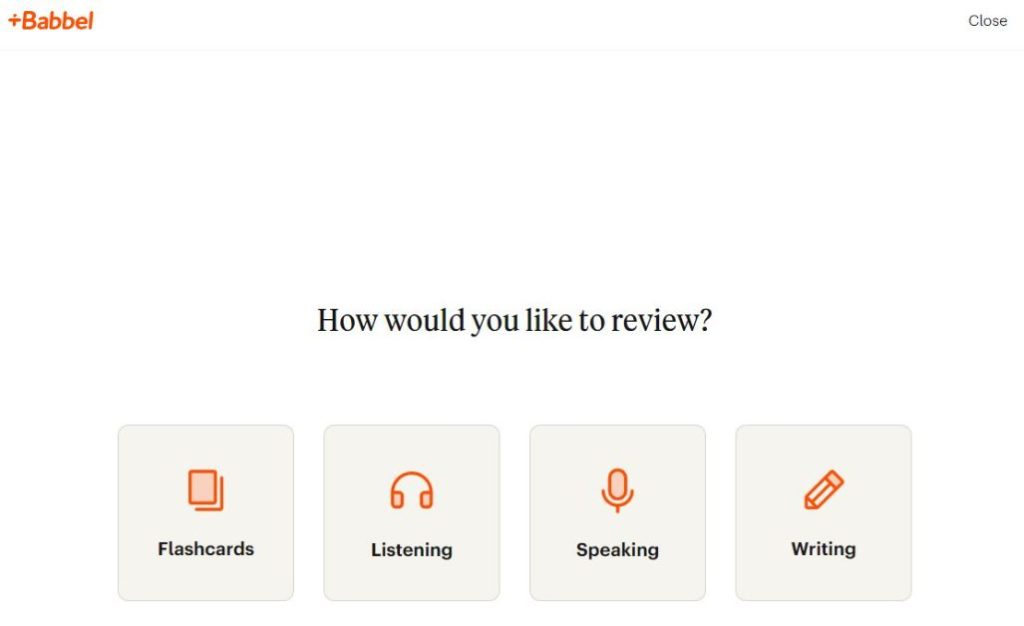
- Babbel organises vocabulary and grammar into structured courses and uses CEFR levels to describe course progression.
- Lessons include dialogues, vocabulary, grammar explanations, review activities, and cultural notes.
- Available on the web, App Store, and Google Play.
- Activities include images, audio, multiple choice, translation matching, word building, and dialogue completion.
Tradeoffs:
- Babbel offers 14 languages on its current US plan page, fewer than broad-catalog apps such as Mondly.
- Babbel only lets you sample the first lesson of each course for free, so to actually work through a course you’ll need to pay for a subscription. Check the terms before subscribing.
For our in-depth review of Babbel, click here
Languages: Babbel’s current US pricing page includes all 14 languages; availability can depend on the language you already speak.
Cost: Babbel lets registered users try the first lesson of every course for free. Full access requires a subscription. Babbel says prices vary by location, term, plan, seller, and platform, so use its current pricing page rather than an old dollar quote.
Duolingo
Consider it for: free, gamified lessons and short daily practice.
Duolingo offers gamified language courses through short exercises. Its learning content is available without a paid subscription, while Super and Max add features. Check the course and device you plan to use, because not every feature is available everywhere.
Features and format:
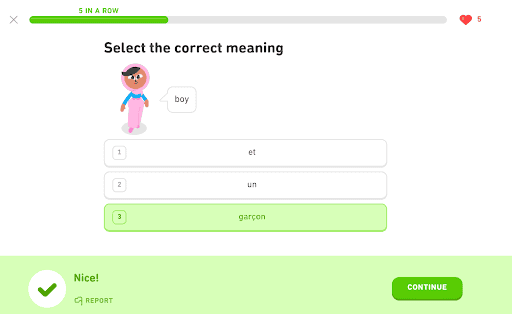
- Short exercises cover combinations of reading, listening, writing, and speaking, depending on the course.
- Streaks, points, and other game mechanics structure daily practice.
- You can use it on the web and download the app from Google Play and the App Store.
- Stories provide short contextual reading and listening exercises in supported courses.
Tradeoffs:
- Course depth and feature availability vary by language and device.
- If points and streaks are not useful motivators for you, compare the exercises themselves rather than the rewards.
Languages: Over 40 languages including Spanish, French, Japanese, Italian, and more.
Cost: Duolingo’s learning content has a free ad-supported tier. Super Duolingo removes ads and adds practice benefits; Max adds Roleplay and Video Call in supported mobile courses. Subscription prices vary by plan, platform, promotion, and region and are shown before purchase.
Memrise
Consider it for: vocabulary, review, and videos of native speakers.
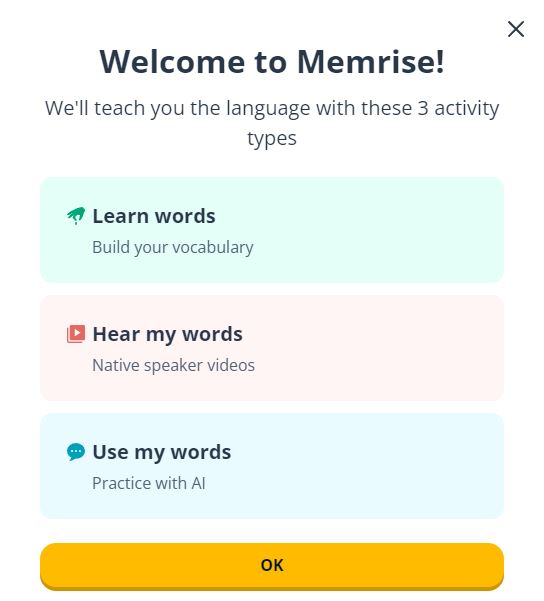
Memrise combines vocabulary review with short videos of native speakers and private AI conversation practice. Its official pages describe smart review and pronunciation features, although availability can vary by language and item.
Features and format:
- Memrise now includes MemBot, an AI chatbot you can practice conversations with, on top of the vocabulary tools.
- You can access it on any device. You can use the web app when you’re on a computer or download the mobile app from the App Store and Google Play.
- Review tools organise vocabulary and let learners mark items as difficult or known.
- Lesson summaries group words by review status.
Tradeoffs:
- Because Memrise now relies on its own official content rather than the community-created courses it offered in the past, there’s less variety than there used to be.
- Memrise focuses more on vocabulary and phrases rather than in-depth grammar instruction. While you might pick up some grammatical structures through example sentences, it’s not designed as a comprehensive grammar resource.
Languages: Memrise’s catalog changes, and the company does not publish a stable total on its main product page. Check the current course selector for the languages available from your source language.
Cost: You can start for free. Memrise Pro offers monthly, annual, and lifetime options; the official help center says prices vary by country and are displayed in the app or signed-in website.
Preply
Consider it for: personalised one-to-one lessons with a live tutor.
Preply is a marketplace for live one-to-one tutoring rather than a fixed self-study course. Learners compare tutors by language, availability, teaching focus, and rate, then book a paid trial lesson before choosing a recurring schedule.
Features and format:
- Preply provides scheduled live lessons tailored by the chosen tutor. Tutor profiles expose language, availability, teaching focus, and rate.
Tradeoffs:
Live lessons require scheduling and a stable internet connection. Tutor rates vary, and the trial lesson is paid; the guarantee supplies a replacement lesson if the first tutor is not a fit.
Languages: Preply is a broad tutoring marketplace, but its public homepage does not state a current language total. Check the live tutor subject list rather than relying on an old count.
Cost: Tutors set their own rates, so there is no single platform price. You pay for a trial lesson and then choose a recurring lesson schedule. Preply’s trial-lesson guarantee is a free replacement with another tutor if you are not satisfied, not a generally free trial lesson.
Promova
Consider it for: short structured courses, guided AI speaking practice, and documented accessibility options. See Promova’s AI Tutor details.
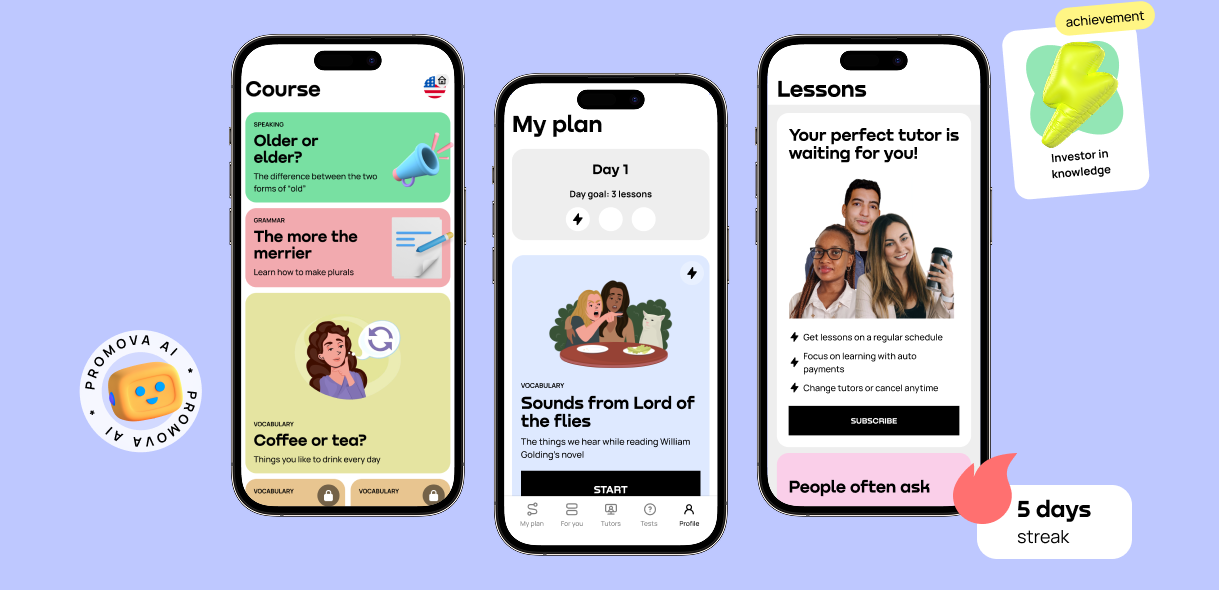
Promova combines bite-sized lessons with a personalized daily plan and several ways to practice speaking. Its self-study courses cover vocabulary, grammar, reading, listening, and speaking. AI Role Play lets you rehearse real-life scenarios by voice or text, while AI Tutor offers short voice-call-style conversations with pronunciation and grammar feedback. It is a good fit if you want one app that mixes a course path with extra AI practice rather than relying on an open chatbot alone.
Features and format:
- The self-study courses use short lessons and a personalised daily plan.
- AI Role Play gives you realistic scenarios and a feedback summary after each conversation. Promova currently offers it for General English, selected English courses, French, German, and Spanish.
- AI Tutor provides short, structured English conversations with instant pronunciation and grammar feedback.
- Dyslexia Mode uses Dysfont, adjustable text, and softer colour contrast; a White Noise setting is also available.
- Promova’s current course navigation lists 13 options, counting Spanish and Latin American Spanish separately and including American Sign Language.
- Several quick web tools, including a pronunciation checker and synonym finder, are available without an account.
- You can use Promova on the web, iOS, and Android.
Tradeoffs:
- AI Tutor is currently focused on English, and AI Role Play is available in only a subset of Promova’s languages.
- Course depth varies by language. Promova’s catalog takes English and the main Spanish course to C1, while some smaller courses currently stop at A1 or A2.
Languages: 13, including English, Spanish, Latin American Spanish, French, German, Italian, Korean, Japanese, Chinese, Arabic, Portuguese, Ukrainian, and American Sign Language.
Cost: Promova says some courses and core features are free. Premium unlocks broader course and AI access; its AI Tutor page currently advertises subscriptions starting at $9.99/month, but the checkout price can vary. The product is available on the web, iOS, and Android.
Frequently asked questions
What are the best language learning apps?
It depends on the practice you want. Copycat Cafe connects everyday dialogues, spoken copying, pronunciation feedback, and AI conversation. Duolingo offers broad free course access. Langua focuses on open AI conversation, Pimsleur on audio lessons, Babbel on structured courses, and Preply on live tutoring. Check current language, plan, and device availability before choosing.
What is the best free language learning app?
Duolingo offers broad ad-supported course access, while Memrise, Busuu, Mondly, Langua, and Promova also document free access with different limits. There is no universal winner: compare the exercises and course depth available for your language.
Is Babbel or Duolingo better?
They serve different preferences. Babbel is a paid structured course with the first lesson of each course free. Duolingo provides free gamified learning content, with paid tiers for extra features and fewer interruptions. Choose based on the course and practice format you will actually use.
Which language learning app is best for speaking?
Choose by the kind of speaking you want: Copycat Cafe for copying example lines before related AI conversation, Langua for open AI conversation and hands-free Call Mode, Pimsleur for audio-led spoken recall, Busuu for selected AI Conversations and community corrections, or Preply for live tutoring. Feature availability varies by language, plan, and device.
Do free language learning apps actually work?
Free tiers can provide substantial lessons and practice, but no universal outcome follows from an app being free or paid. Compare the exercises, course depth, speaking opportunities, limits, and feedback available for your language, then judge whether they match your goal.