
Disclosure: This article contains affiliate links. If you sign up through them, we may earn a commission at no extra cost to you. This doesn't influence our review.
Pricing note: Babbel pricing changes frequently. For current rates, visit Babbel’s official pricing page. Prices quoted below were verified in July 2026.
In July 2026 we re-verified Babbel’s current pricing (including the new Group Plan launched in April 2026), corrected the language count and free-lesson details, and confirmed that Babbel Speak remains a mobile-only beta feature and that Babbel Live is no longer offered to individual learners.
Launched in 2008, Babbel is one of the most established language learning apps on the market. But in 2026, with AI conversation apps entering the space, is Babbel still worth your money for learning French?
I spent several weeks testing Babbel’s French course at both beginner (A1) and upper intermediate (B2) levels. Here’s what I found.
Looking at Babbel for Spanish instead? Read our dedicated Babbel Spanish review, which covers its Mexican and European Spanish courses.
The quick verdict
Babbel is best for: Structured learners who want a comprehensive overview of French grammar, vocabulary, and culture, without gamification gimmicks.
Babbel is NOT best for: Learners whose primary goal is speaking confidently. Babbel’s speaking practice is limited compared to conversation-focused apps.
My honest take: If you want to understand French, Babbel is solid. If you want to speak French, Latin American Spanish, Castilian Spanish, Italian, or German, you’ll likely need to supplement it with dedicated conversation practice,that’s what we built Copycat Cafe for.
What is Babbel?
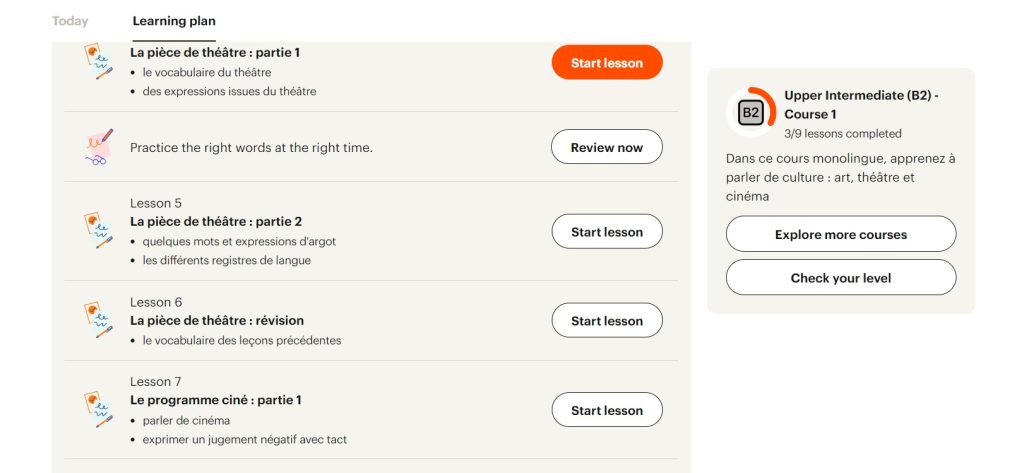
Babbel is a language-learning platform with structured self-study courses on the web, iOS, and Android. Its lessons are usually 10 to 15 minutes and mix listening, reading, speaking, writing, grammar, and culture.
For French learners: Babbel’s official course table describes French content up to B2/C1, with additional-topic courses up to B2. I would not treat that as one perfectly uniform A1-to-C1 path, because course depth and labels differ by section.
- Platforms: web, iOS, and Android, with progress syncing across devices
- Lessons: short themed courses and units with varied interactive activities
- Audio: Babbel says its learning audio is voiced by native speakers
- Languages: 14 overall, with availability depending on your display language
Babbel Speak
Babbel Speak is a mobile-only beta for AI conversation practice. With US English as the display language, it currently supports French, German, Italian, and Mexican Spanish. It guides you through scenarios, lets you ask for repetition, slower responses, translations, or hints, and gives feedback after completed tasks or vocabulary.
That is a meaningful addition, but my judgment remains the same: it feels more guided than the kind of extended, open-ended dialogue I want from a dedicated conversation app.
What I liked about Babbel
Clean, intuitive interface
No cartoon characters begging you to maintain a streak. No treasure chests or XP points. Babbel feels like an adult learning tool, not a mobile game. For learners who find Duolingo’s gamification annoying, this is refreshing.
Access to all levels from day one
Unlike apps that lock content behind progress gates, Babbel lets you jump to any level immediately. Want to test yourself with B2 content? Go ahead. Need to review A1 basics? No problem. This flexibility is genuinely useful.
Varied exercises that stay interesting
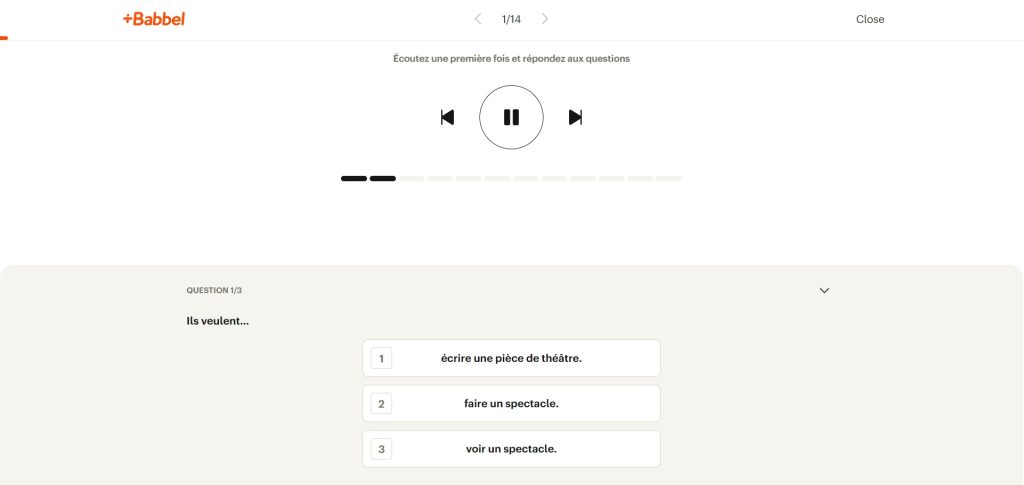
Each lesson mixes vocabulary drills, dialogue listening, word scrambles, fill-in-the-blank, and speaking exercises. The variety helps prevent the monotony that plagues many language apps.
Native speaker audio throughout
Every dialogue and vocabulary word is recorded by native French speakers at natural speeds. This is essential for training your ear to real French,not the slow, over-enunciated audio some apps use.
Helpful grammar and cultural tips
Those little pop-up windows explaining why something works the way it does? Actually useful. Babbel explains grammar in context and includes cultural notes that help you understand why French works the way it does, not just what to say.
Genuinely challenging upper levels
The B2 content surprised me. Instructions are entirely in French. Audio is at natural speed with realistic connected speech. If you’ve used apps where “advanced” content is still disappointingly easy, Babbel’s upper levels may feel appropriately challenging.
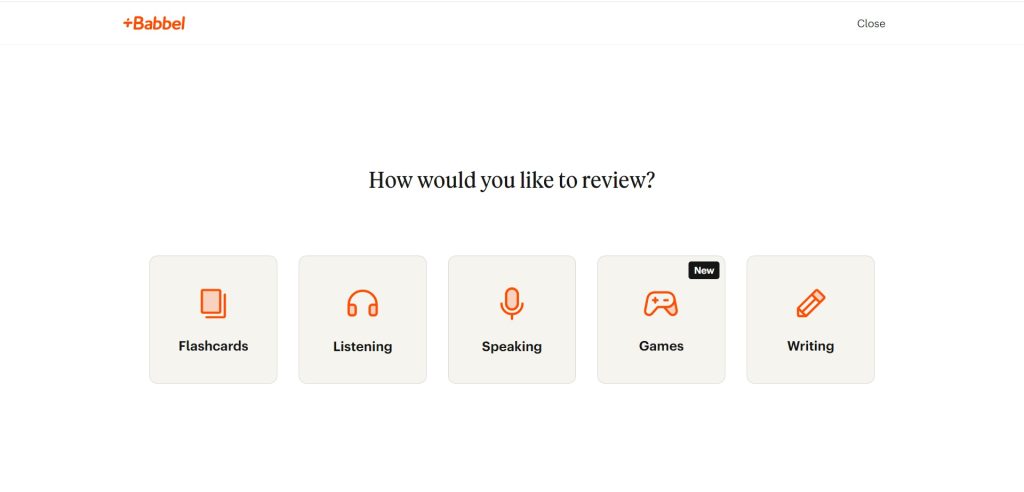
Multiple review options
Flashcards, listening practice, speaking drills, games, writing exercises,Babbel offers several ways to reinforce what you’ve learned. The spaced repetition system tracks your mistakes and prioritizes weak areas.
What I didn’t like about Babbel
Limited speaking practice
This is my biggest criticism. Babbel’s speaking exercises are mostly “repeat after me” drills. You say a pre-written phrase, the app gives you a checkmark (or doesn’t), and you move on.
While Babbel Speak adds guided scenario practice, it’s structured around predetermined conversations rather than open-ended dialogue. For learners whose primary goal is extended, freeform conversation practice, dedicated speaking apps may provide more depth.
Lenient pronunciation feedback
Babbel’s speech recognition is technically impressive, but in my testing it felt forgiving. I deliberately mispronounced words and still received passing marks. The app tells you if it understood you, but provides limited detail on how well you pronounced specific sounds.
No audio speed control
You can’t slow down lesson dialogues to catch every syllable, then speed up to natural pace. It’s one speed only. (The Babbel Speak beta is a partial exception,there you can ask for responses to be repeated or slowed down,but core lessons play at a single speed.) For learners who need to hear things slowly before progressing to natural speed, this is a limitation.
No dialogue transcripts for review
You can see dialogue lines during exercises, but there’s no easy way to review a complete dialogue with its transcript afterward. For visual learners or anyone who wants to study the written French alongside the audio, this can be frustrating.
No live classes for individual learners
Babbel previously offered Babbel Live, small-group classes with certified teachers. However, this service was discontinued for individual learners in mid-2025,the last classes could be booked until June 30, 2025. Babbel Live is now only available through Babbel for Business.
Won’t make you fluent alone
This isn’t unique to Babbel,no single app will make you fluent by itself. But Babbel’s structured approach can create the illusion of progress without building real speaking ability. You might complete the entire French course and still feel unprepared when someone actually speaks French to you.
How much does Babbel cost?
Babbel prices vary by country, platform, plan type, and promotion. These were the clearest current US examples I could verify in August 2026:
- Babbel website: $107.40 for 12 months of all-language access, or $299.99 lifetime
- US App Store: $17.99 for one month, $45.99 for three months, $89.99 for a one-language annual plan, or $107.99 for an all-language annual plan
- Group Plan: $30.95 per month for up to six users, purchased on the website
Those prices can change, and a promotion may alter what you see. Check Babbel’s current pricing page and compare it with the price in your app before paying.
What to know:
- Recurring subscriptions are paid upfront and renew automatically unless canceled.
- Lifetime access is a one-time payment and includes all languages offered in the plan.
- Babbel offers 14 languages overall. For English speakers, Spanish is split into Mexican Spanish and European Spanish tracks.
- The first lesson of every course is free, and some languages include additional free material.
- Babbel’s 20-day guarantee covers first purchases on Babbel’s website, gift site, or Google Play. Apple handles App Store refunds, and renewal payments are not covered by the guarantee.
Babbel vs Duolingo: Quick comparison
| Feature | Babbel | Duolingo |
|---|---|---|
| Price | Paid plans; first lesson of each course free | Full course path available free; paid tiers optional |
| Approach | Structured courses | Gamified path |
| Grammar | Detailed, in-context explanations | Lighter and more embedded in exercises |
| Speaking | Speech exercises, Guided Conversations, and Babbel Speak beta | Speaking exercises; Max adds Video Call and Roleplay |
| Best fit | Learners who want structure and grammar | Learners motivated by gamification and a free path |
My take: Babbel feels more thorough on grammar and course structure. Duolingo is easier to start for free and better at turning practice into a habit. Both now include speaking features, but neither felt as open-ended as a dedicated conversation tool in my review.
Babbel vs Copycat Cafe: Different approaches
Since speaking is where I found Babbel less satisfying and where Copycat Cafe concentrates its effort, here is the fairest side-by-side comparison.
| Feature | Babbel | Copycat Cafe |
|---|---|---|
| Primary focus | Broad self-study foundation | Practical dialogue and speaking |
| Pronunciation | Speech recognition and exercise feedback | 0 to 100 line or chunk score with focused feedback |
| Audio speed | One speed in core lessons; Speak can repeat or slow a response | Slow and normal-speed lesson audio |
| Conversation | Guided Conversations and Babbel Speak beta | Open AI conversation, up to 1,000 messages/day |
| Courses | 14 languages overall | French, Spanish (Latin America), Spanish (Spain), Italian, and German |
| Best fit | Grammar, vocabulary, and structured progression | Focused listening, pronunciation, and conversation practice |
Full disclosure: We make Copycat Cafe. We have done our best to compare the products on the same criteria, but you should know we have skin in the game.
Choose Babbel if: You want a broad French foundation covering reading, writing, listening, grammar, and culture in a structured format.
Choose Copycat Cafe if: Your main goal is to rehearse practical dialogue aloud, receive scored pronunciation feedback, and continue into an open AI conversation.
Use both if: You like Babbel for structure and want a separate speaking routine. The combination addresses different gaps.
Who should use Babbel?
Babbel may be a good fit if you:
- Want structured lessons that build systematically
- Prefer learning without gamification
- Need grammar explanations and cultural context
- Are comfortable supplementing with other speaking practice
- Like the flexibility to jump between levels
Babbel may NOT be a good fit if you:
- Want to focus specifically on speaking and pronunciation
- Need detailed, scored feedback on your pronunciation
- Prefer extensive AI conversation practice
- Want to adjust audio playback speed
- Are looking for a single app that covers everything
FAQ
Is Babbel better than Duolingo for French?
It depends on your learning style. Babbel offers more detailed grammar explanations and structured courses. Duolingo offers a full free path and uses gamification to encourage frequent practice. Both include speaking features, but their style and depth differ.
Can Babbel make me fluent in French?
No single app guarantees fluency. Babbel can help you build grammar, vocabulary, listening, reading, and speaking practice, but comfortable real-world use normally requires time and additional interaction with the language.
Is Babbel worth the money?
Babbel offers good value for learners who want structured courses, grammar explanations, and varied review. If your main priority is open conversation or detailed pronunciation scoring, compare it with a speaking-focused app before committing.
How long does it take to complete Babbel French?
Babbel lessons are usually 10 to 15 minutes, but there is no single official completion time. It depends on which courses you take, how often you study, your starting level, and how much review you need.
Does Babbel have live classes?
Babbel Live for individual learners ended in 2025. Classes could be booked through June 30, 2025, and materials remained available through August 31, 2025. Babbel for Business is separate.
What is Babbel Speak?
Babbel Speak is a mobile-only beta for guided AI conversation. With US English as the display language, it currently supports French, German, Italian, and Mexican Spanish. It includes scenario practice, hints, repeats, slower responses, translations, and feedback.
My final recommendation
Babbel does what it does well: structured, comprehensive French lessons with quality content created by linguists. It’s a legitimate learning tool, not a dopamine-harvesting game disguised as education.
But here’s something I wish someone had told me earlier: completing an app’s curriculum and speaking French confidently are two different achievements. Babbel can teach you about French. It may not fully prepare you to speak French in real situations.
If you want well-rounded exposure to French grammar, vocabulary, and culture, Babbel is a solid choice at a reasonable price.
If your primary goal is speaking confidently,ordering coffee in Paris, chatting with French friends, not freezing when someone speaks to you,you’ll likely benefit from dedicated speaking practice that Babbel doesn’t fully provide.
My suggestion: Consider starting with Babbel if you’re a true beginner who needs structure. Add conversation practice (whether through a speaking app, a tutor, or language exchange partners) once you have basic vocabulary.
Or, if speaking is already your main goal, consider starting with speaking practice and adding grammar study later for reinforcement.
The best approach depends on your specific goals. Just don’t assume any single app will do everything.
Ready to start?
→ Try Babbel free , The first lesson of every course is free, with a 20-day money-back guarantee on subscriptions
→ Copy your first conversation if speaking is your priority
→ Compare more options , Full guide to French learning apps
→ Language learning affiliate programs , If you create content about apps like Babbel, see which ones actually pay creators
This review reflects Alysa’s hands-on experience with Babbel’s French course. Current product facts and US price examples were checked against official sources in August 2026. Prices, promotions, and feature availability can change, so confirm the offer shown to you before purchasing.