
Disclosure: This article contains affiliate links. If you sign up through them, we may earn a commission at no extra cost to you. This doesn't influence our review.
Prices checked October 17, 2026.
Looking for the best French learning app? This guide compares 11 popular options. Most were tested hands-on for at least two weeks.
The short answer: The best app to learn to speak French is Copycat Cafe (we make it). You hear an everyday conversation, say each line aloud with a pronunciation score on every word, then use it with Copy, your AI conversation partner. If you want free lessons, grammar, an audio course or a live tutor, our picks for those are below.
Below, you’ll find honest comparisons based on hands-on testing and clearly labeled research, including what each option does well and where it falls short. (Spoiler: No app is perfect.)
If you want scheduled classes or a syllabus to follow, compare our online French courses and live classes. This guide focuses on apps for everyday French practice.
How we tested
Alysa, a French teacher in Paris for over a decade, used most of these apps for at least two weeks each, as a teacher and as a language learner. She judged pronunciation feedback, audio and speed options, conversation practice, grammar and culture, the time each app asks for every day, and value for money.
Run a blog or channel yourself? Here’s our guide to language learning affiliate programs and which ones are worth promoting.
What is the best app to learn French in 2026?
The best app to learn to speak French is Copycat Cafe. For other goals, these are the best apps:
| Category | Best app | Why |
|---|---|---|
| Best app to learn to speak French | Copycat Cafe (our app) | You hear an everyday conversation, say each line aloud with a pronunciation score on every word, then use it with Copy, your AI conversation partner. |
| Best free | Duolingo | Its core French lessons are free, and streaks make a daily habit easy to keep. |
| Best for grammar and short lessons | Babbel (see: Babbel vs Duolingo) | Lessons of about 10 to 15 minutes mix grammar tips with varied exercises. |
| Most complete course, including reading and writing | Rocket French | Its audio dialogues, speaking role-plays, grammar and culture lessons cover more of French than any other app here. |
| Best audio course | Pimsleur | Its 30-minute audio lessons train you to listen and answer aloud, with no screen needed. |
| Best AI conversation partner | Langua | You can chat or call about any topic you choose, or role-play a custom scenario. |
| Best for learning with TV and videos | FluentU | French movie clips, news and music videos come with clickable subtitles and slower playback. |
| Best with a human tutor | Preply | You book live video lessons with a French tutor who adjusts each lesson to your goals. |
If you’re curious about these apps, as well as some others, read to see some of the good and bad points of each one, as well as a brief description.
And if you want to go more in-depth, you’ll also find links to longer reviews of most of the apps here.
💬 “This course has given me more confidence in my pronunciation and usage.”
Rebecca Spears, United States. Read her testimonial.
Copycat Cafe
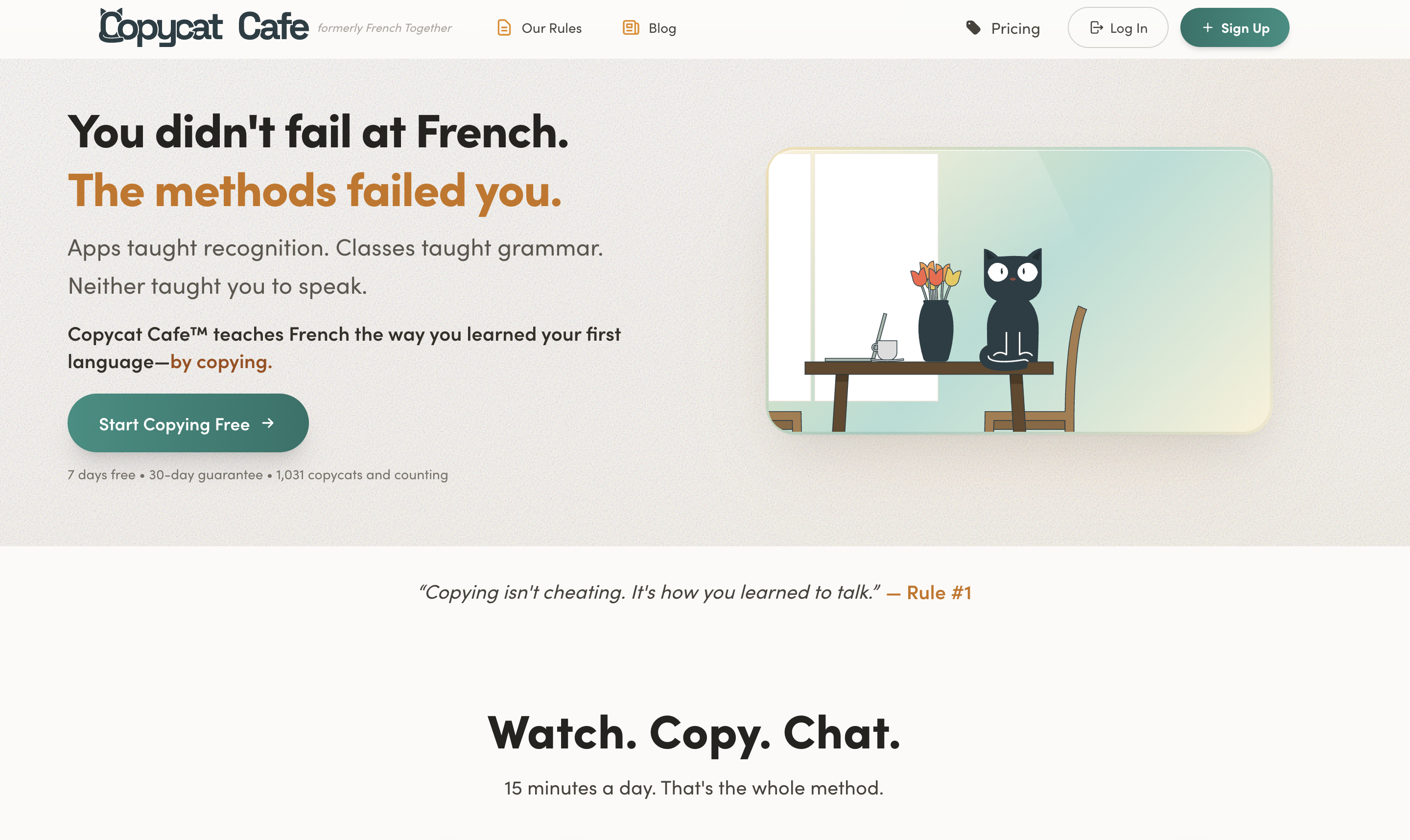
Co-founder Benjamin Houy originally started French Together, which became Copycat Cafe in 2025. Here’s what makes the app different:
Each Copycat Cafe lesson has three steps: Watch, Copy, Chat. You listen to an everyday dialogue and rebuild its lines, then say each line aloud with a pronunciation score on every word. After that, you use the same phrases in conversation with Copy, your AI conversation partner. You can also open Chat on its own.
Copycat Cafe has courses in French, Latin American Spanish, Spanish from Spain, Italian and German. One subscription includes all five.
Its French lessons use everyday situations to connect vocabulary with listening and speaking practice.
The app teaches you to have real conversations through a series of lessons that include:
- 200 structured lessons per course, organized from A1 to B2.
- Text or voice-call Copy, your AI conversation partner, every day.
- AI pronunciation feedback with a 0–100 pronunciation score on every word
- Slow and normal-speed audio for lesson phrases
- See what the app heard you say after each recording
- Phrase review to revisit useful language you’ve practiced
Lessons are designed for short practice sessions, though the time you spend depends on how much you repeat and chat.
What’s good about Copycat Cafe
- The app includes an AI pronunciation checker that scores every word from 0 to 100 and gives you feedback for your next attempt.
- Dialogues use natural-sounding generated audio at normal and slow speeds.
- The courses use a range of generated voices, so you are not listening to just one voice throughout.
- I like that you can see lines of dialogue in their written form, too. A helpful feature for us visual learners and/or hearing impaired people, not to mention just about anyone, since French spelling and pronunciation are so different.
- As you work, the app also has helpful windows of information about grammar and vocabulary that you can choose to read and learn about or ignore if you prefer. (I’m a grammar junkie, so I read them all.)
Experiences shared by Copycat Cafe users:
Stephanie Argy, who lives in Paris, reports that people she regularly interacts with noticed an improvement in her French.
Chris Horler in Switzerland reports passing the B1 oral and A1 written parts of a FIDE test with scores of 92 and 95 percent, and credits the course with helping him prepare.
Rebecca Spears in the United States says she felt more confident speaking after about seven weeks.
Your own progress depends on how much you practice and where you start.
Who Copycat Cafe ISN’T for
Copycat Cafe is specifically designed for learners who want to speak French in real-life situations. That means it’s NOT ideal if you:
- Need comprehensive grammar textbooks. The app teaches grammar contextually, not through extensive written explanations (check out our Copycat Cafe blog for supplementary grammar resources)
- Prioritize reading and writing over speaking. The course is designed mainly around listening, repeating, pronunciation, and conversation practice
- Learn better from varied exercise types. The method is focused and repetitive by design (Watch → Copy → Chat)
- Want an app from the App Store or Google Play. Copycat Cafe is a web app that works in your phone’s browser, and there’s no native app yet
How much does Copycat Cafe cost?
Copycat Cafe costs $174 a year ($14.50 a month) or $29 a month, with a 7-day free trial and a 30-day money-back guarantee on your first payment.
Your plan includes up to 1,000 messages a day and 30 minutes of voice calls a day with Copy. Check your local version of Copycat Cafe’s pricing page for prices in your currency.
Price vs. value: Copycat Cafe’s annual plan works out to $14.50/month, while Duolingo offers free core courses. I would weigh the cost against how much you want focused speaking practice:
- Speaking from the start. You practice lesson phrases aloud.
- Focused practice. Lessons connect the phrases you copy with a conversation scenario.
- Specific feedback. Pronunciation feedback gives you something to work on in your next attempt.
Langua
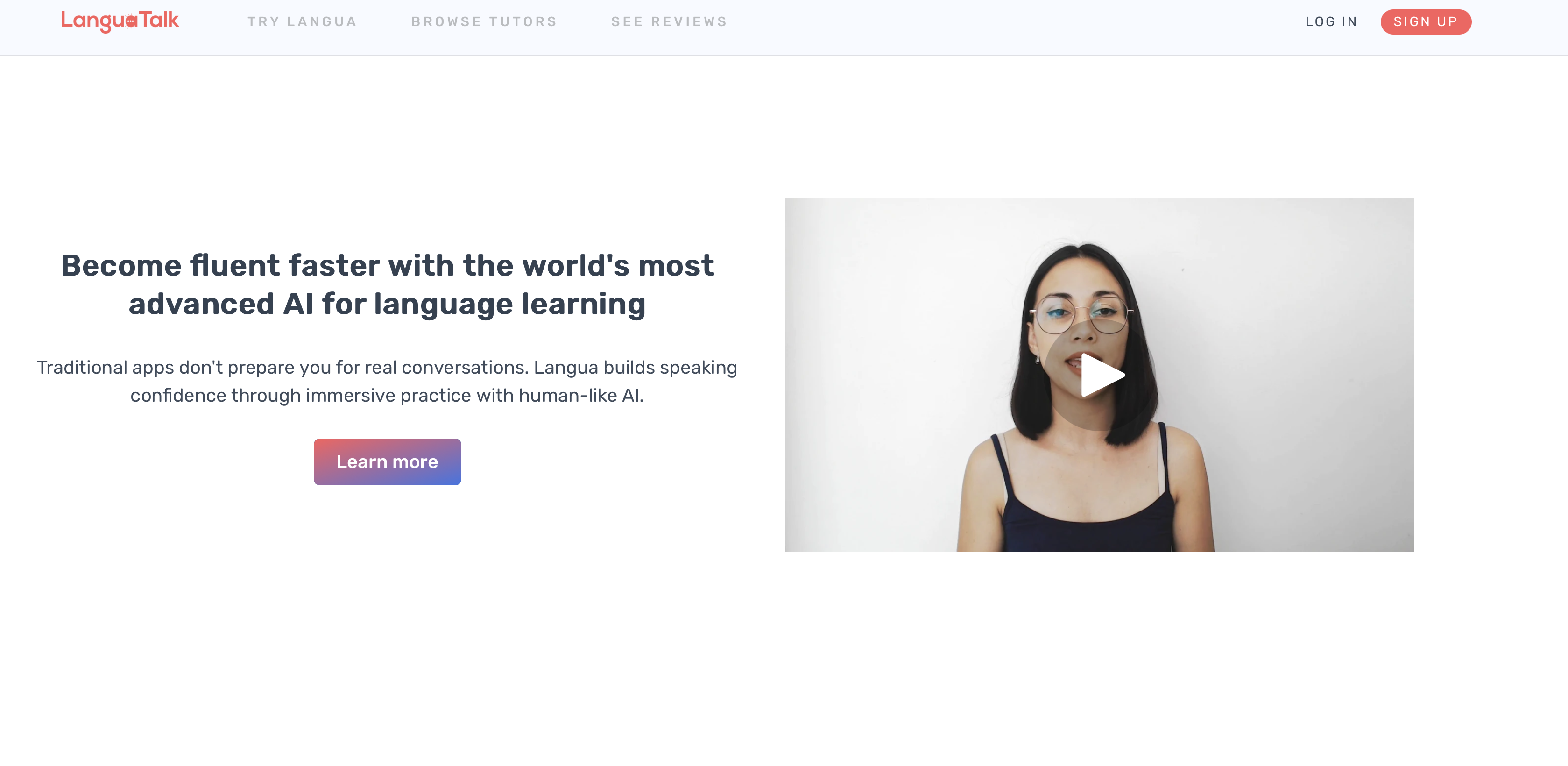
Langua is available on the web, iOS, and Android. It lets learners build vocabulary and listen to podcasts or watch videos with features such as transcripts and one-click translation. There’s also an AI-generated Stories feature. But Langua is probably best known for its AI chatbot that lets you practice French conversation. For a detailed look at its AI tools, flashcards, pricing, and tutoring marketplace, read our full LanguaTalk review.
What’s good about Langua
- Langua has a simple interface, which I always like since it’s easy to use, you don’t get distracted or lost, and also it means to me that the developers are more concerned with content than looks.
- The chatbot feature lets you either choose what to chat about or do a role-play.
- You can choose a male or female voice for the chatbot. Listening to both can help train your ear.
- For a role-play with the chatbot, I really love the option to choose a custom topic if the ones provided don’t fit what I’m looking for. It’s great how flexible the system feels. When I asked a random question in my test, the chatbot replied promptly and with a personalized touch.
- The podcasts, videos and articles features are a great way to learn French by reading and listening and give you more material for comprehensible input.
What’s not good about Langua
- French chatbots can be a fun way to practice French, but I wouldn’t treat free-form chat as a complete course on its own.
- Langua now offers a structured Guided Course for A1 and A2 learners, plus a Guided Mode for supported conversations. I still think its strongest feature is flexible AI practice for learners who already know some French.
- The app’s Stories use vocab words you’ve saved to create a story generated by AI, a neat concept. During my testing, I found lots of small errors in the stories, so I considered them less reliable than studying a pre-written text or dialogue you’d find in many other French learning apps.
- During my test of Communicate with AI, it sometimes kept telling me to “listen and try again” without indicating which words I pronounced correctly and incorrectly. Langua now documents several feedback options; the corrections you see depend on your mode and settings.
My take: Langua is strongest for learners who want flexible AI chat practice. Its A1 and A2 Guided Course now gives beginners more structure than it did when I first tested it, but if you want a course built around short speaking lessons with pronunciation feedback, consider Copycat Cafe’s focused approach.
How much does Langua cost?
Langua’s free plan allows about 20 standard-chat messages a week and 3 minutes of Call Mode a day. Standard includes 75 messages and 30 call minutes daily; Unlimited removes those advertised plan limits.
The US App Store lists these purchase options:
- Communicate: $19.99/month or $149.99/year. The web help calls its limited paid tier Standard.
- Unlimited: $29.99/month or $199.99/year. Check the plan and renewal terms at your checkout.
Langua’s pricing help describes a card-backed trial of 5 days for monthly plans and 7 days for annual plans. Its 30-day guarantee covers web and Android subscriptions; Apple handles App Store refund requests.
Natulang
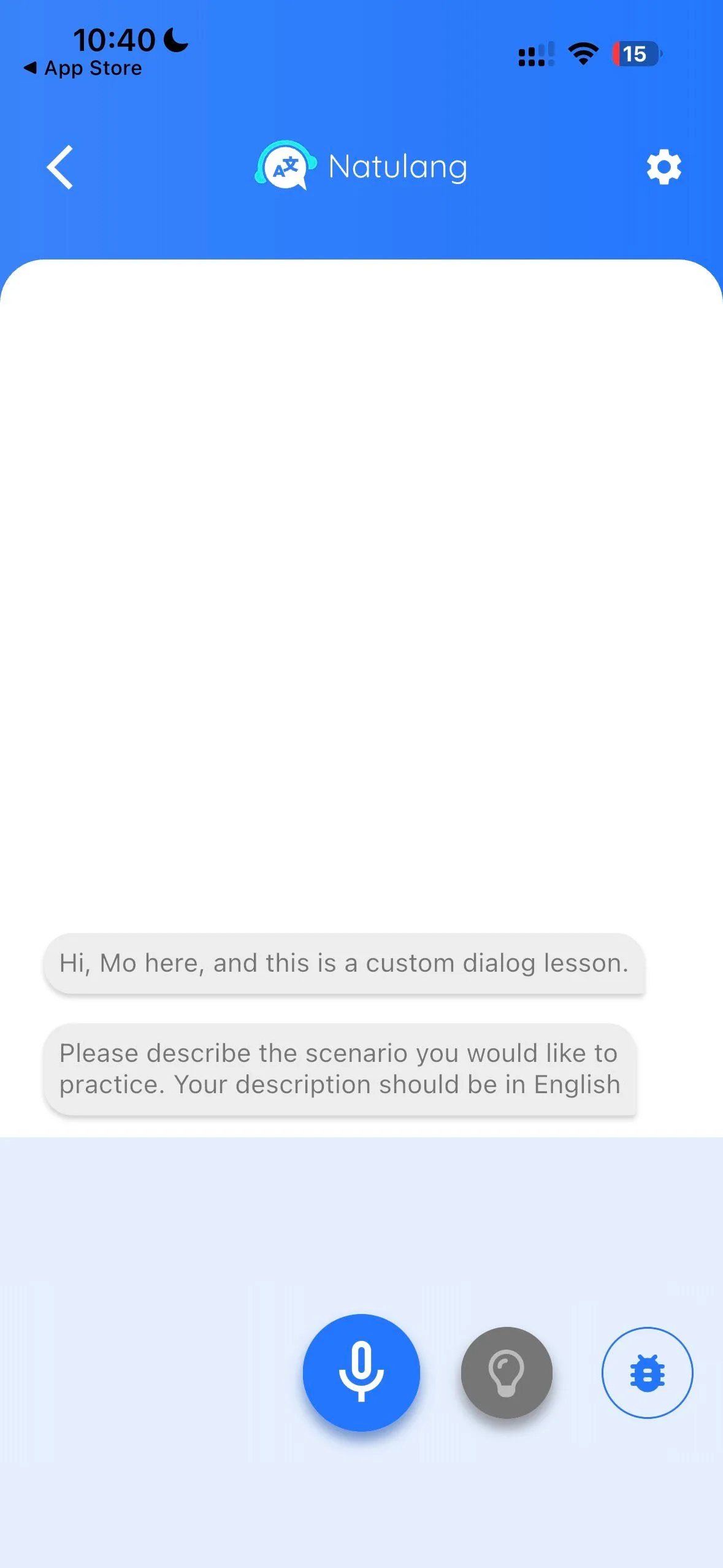
Natulang is available on iPhone, iPad, and supported Apple-silicon Macs, as well as Android. It is built around speaking: instead of choosing from a word bank, you listen, recall a phrase, and answer aloud. Free Dialogs uses AI to build role-plays around situations you choose. We used Natulang’s Spanish course on iPhone, which shares its interface with the French course.
Want the full picture? Read our in-depth Natulang review.
What’s good about Natulang
- Speaking comes first: Natulang asks you to produce the language aloud rather than only recognize the right answer on screen.
- Free Dialogs makes practice personal: In the Spanish course we tested, you can describe a situation in English and generate a tailored role-play.
- Help stays inside the conversation: In our Spanish test, lines included audio, translation and suggested grammar questions, so we could investigate phrases without leaving the dialogue.
- Saved phrases return for review: In that test, bookmarked lines returned in repetition lessons and flashcards.
- You can try it before paying: Some lessons are free, letting you test the workflow and speech recognition on your own device.
What to know before trying Natulang
- The lesson path could be clearer: Our placement result unlocked 196 lessons at once without clearly recommending what to do next. The library is broad, but the dashboard can feel crowded.
- Speech recognition checks words, not sounds: In our test, Natulang showed the text it recognized beside the target phrase, without grading individual sounds.
My take: Natulang looks most useful for learners who want frequent speaking prompts and custom role-plays without scheduling a tutor. Start with the free lessons and see whether the voices and lesson style suit you.
How much does Natulang cost?
Natulang includes some free lessons. Its US App Store listing shows these purchase options:
- Premium: $9.99 (the public listing does not show the billing period)
- Lifetime French: $119.99 one-time
- All Languages: $199.99 (the public label does not state its duration).
Try the free lessons first to see how the French voices and speech recognition work with your accent and device.
Pimsleur
Pimsleur is an established audio-based language course, available on computers and mobile devices.
Its method puts listening, spoken recall and spaced repetition at the center of practice.
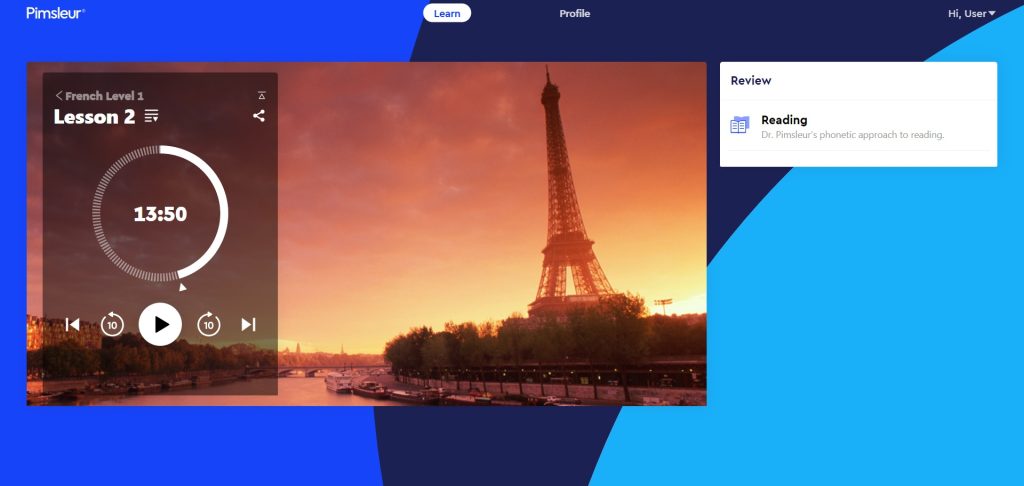
The core Pimsleur Method still relies heavily on audio learning and the repetition of words, sounds, and syllables. Learners listen to dialogues and then follow a series of lessons that build on vocabulary from those dialogues. Current app subscriptions also include supporting review tools and visual exercises, but the daily audio lesson remains the center of the course.
For more information, check out our in-depth review of the Pimsleur French app. Otherwise, read on for my major takeaways from the app.
An important note about the Pimsleur app
Pimsleur’s French course has five levels with 30 half-hour core audio lessons each: 150 lessons in total. Supporting activities depend on your purchase or subscription.
The core audio lessons are designed to be completed by ear and do not provide a full written transcript. You can replay sections, and current app access includes tools such as Voice Coach, Speak Easy conversations, flashcards, quizzes, and review activities.
Those supporting tools make the current Pimsleur app more varied than the old audio-only program, but they do not change the course’s basic approach: one roughly 30-minute spoken lesson per day, reinforced with optional review exercises.
Pimsleur also offers Voice Coach for pronunciation practice. Its iOS release notes list AI Conversation Coach in beta for All Access learners of French and Latin American Spanish.
What’s good about the Pimsleur French app
- I can see why the audio-first approach appeals to learners who like a steady daily routine.
- The repetition gives you plenty of practice listening and answering aloud.
- Good for audio learners.
- A good resource for French learners focused on pronunciation.
- Voice Coach adds speech-recognition feedback to help you practice pronunciation.
What’s not good about the Pimsleur French app
- Probably not for people who are visual learners and/or who prefer written explanations alongside the audio. I know this is the case for me. Of all the French learning apps I’ve reviewed, I’ve really disliked Pimsleur and cannot imagine using it to learn French. Of course, everyone is different….
- The core audio lessons have no full transcript. That was frustrating for me as a visual learner. The app does have reading lessons, visual review activities and written Speak Easy dialogues, so it would be inaccurate to say it has no written French. Speak Easy also offers slower playback.
- I wanted more explicit grammar explanations than I found in the audio-led lessons.
- I would supplement Pimsleur if I wanted extended discussion of niche subjects or more varied grammar work. The newer Conversation Coach adds AI practice.
- The French in the lessons I tried felt more formal than the everyday conversational style I prefer.
My take: Pimsleur is excellent for audio-focused learners who want to nail pronunciation through repetition. If you also need visual transcripts and conversational French, Copycat Cafe gives you both audio practice and written support.
How much does Pimsleur cost?
Pimsleur advertises a 7-day subscription trial that renews unless canceled. Compare the included tools before choosing a plan.
US Pricing:
- All Access on the web: Pimsleur’s US All Access offer lists $20.95/month for its language catalog, including French. Check the French checkout for the offer available to you.
- US App Store annual options: All Access is listed at $131.99 and $164.99/year.
Pimsleur’s All Access plan covers its full language catalog, making it good value if you’re interested in learning multiple languages.
Additional options:
- One-time purchases are available for individual French levels or bundles
- Premium and All Access can be shared with up to three additional household members, with separate progress profiles.
See Pimsleur’s subscription FAQ and its US App Store listing for current options. Cancellation and refund rules depend on where you buy.
Babbel
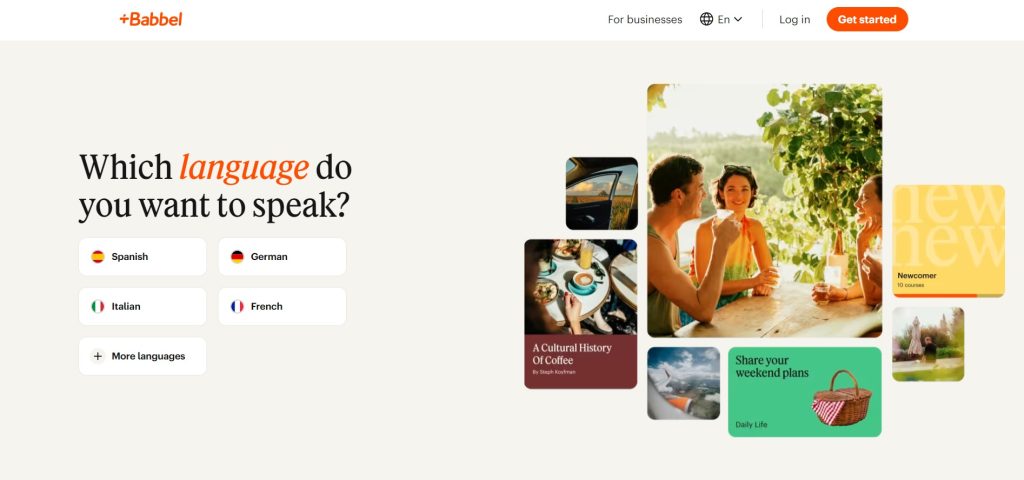
Babbel’s current language guide lists French courses up to B2/C1, with additional topics up to B2, for English speakers. Lessons typically take around 10–15 minutes and combine different exercises.
Babbel covers most basic parts of French learning: listening, reading, speaking, writing, and features grammar and even culture-related explanations.
You can find more information in our in-depth Babbel French review. Or read on for my major takeaways about the app.
What’s good about Babbel
- Each lesson focuses on specific vocabulary, which could get repetitive, but the review exercises are varied enough to keep things from getting boring.
- Exercises range from interactive dialogues to word scrambles, touching bases for different kinds of learners (audio, visual, etc.) and skills.
- Babbel also uses what you learn in practical scenarios. For instance, master a few prepositions and you’ll see them applied to a dialogue about asking directions in French.
- Sometimes, bonus information and details pop up in little windows. These can range from helpful grammar tips to information about works of art being discussed in the dialogue you’re working on.
- Babbel covers writing, listening and speaking as well as grammar, which made it feel like a well-rounded choice to me.
- Babbel Speak adds guided AI scenarios with hints and translations.
- For French, Babbel Speak is a mobile beta for learners using American English as their display language. Feedback follows the conversation; you can repeat or slow down the AI replies.
What’s not good about Babbel
- I wanted more audio-speed control in the version I tested. Babbel now documents a slower-playback button in supported speech exercises, and Babbel Speak lets you slow replies. Availability varies by activity.
- Babbel no longer offers live classes to individual learners. Its current product page confirms that Babbel Live has closed for that audience.
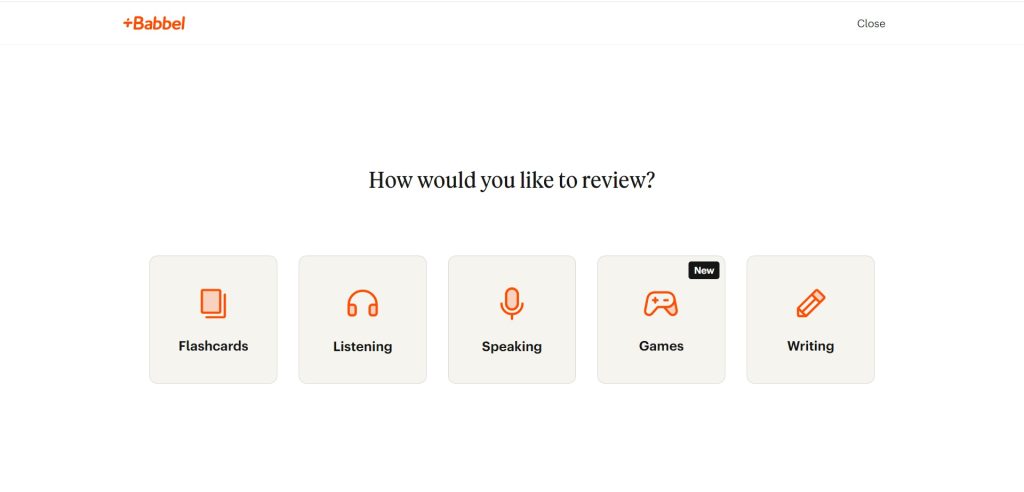
My take: Babbel is great for varied, bite-sized lessons. If you want more practice copying useful phrases aloud with focused pronunciation feedback, Copycat Cafe can be a speaking-focused supplement.
How much does Babbel cost?
Babbel offers several subscription options.
Babbel’s US product page lists these website offers:
- 6 months: $80.70, paid upfront.
- 12 months: $107.40, paid upfront.
- All-languages lifetime: $299.99 as a one-time purchase.
Your price can differ by location, promotion and purchase channel. Subscriptions renew, and the whole selected period is paid in advance. Check the pricing help and checkout for the languages and renewal terms included.
You can try the first lesson of each course free. That is a sample, not a full subscription trial. Check the refund policy for your purchase channel before paying.
FluentU
FluentU is a language learning platform with a cool concept: learning through authentic videos, including French movie clips, news and music videos.
You can watch and listen to the videos at regular or slowed-down speed, and also benefit from cool features like highlighting words in subtitles to get a translation. Words and phrases you highlight can be saved and used in lessons.
You can find more information in our in-depth FluentU review. Or read on for my major takeaways from the app.
What’s good about FluentU
- I found FluentU’s subtitles more useful and reliable than the automatic captions I had encountered on YouTube.
- There’s a huge variety of videos, covering a wide range of topics and genres, for learning levels beginner through advanced.
- Many of the videos featured on FluentU are ones that actual French people would watch.
- It’s very helpful that you can save words and phrases to study and review later with a number of different exercises.
- The learning portion is especially helpful, since words are connected with often memorable images to put them into context.
What’s not good about FluentU
- I found the grammar explanations too concise for my tastes. FluentU’s current French offering includes grammar notes and a beginner course, so I would not describe it as having no grammar support.
- Speaking practice was limited when I used it. FluentU now advertises AI Tutor practice, with higher limits on Super.
- I would still use another resource for extended reading and writing, even though the subtitles and quizzes give you some practice with both.
My take: FluentU is a strong fit for video immersion and training your ear. If you want structured practice copying phrases aloud alongside it, Copycat Cafe’s conversation lessons can be a useful companion.
How much does FluentU cost?
FluentU offers video-based immersive learning with real-world French content:
US Pricing:
- Plus: $29.99/month, or an advertised $143.99 annual offer when checked. The crossed-out annual reference price was $239.99.
- Super: $39.99/month or an advertised $199.99 annual offer, with higher AI Tutor limits.
These are the offers on FluentU’s pricing page; confirm the renewal price at checkout.
FluentU advertises a 14-day trial and a 20-day money-back guarantee, with access to its languages in one account. Its French landing page also offers a no-card starting option, so check the exact access and billing terms of the offer you select. Paid subscriptions renew automatically; its cancellation help advises canceling at least a day before renewal.
Busuu
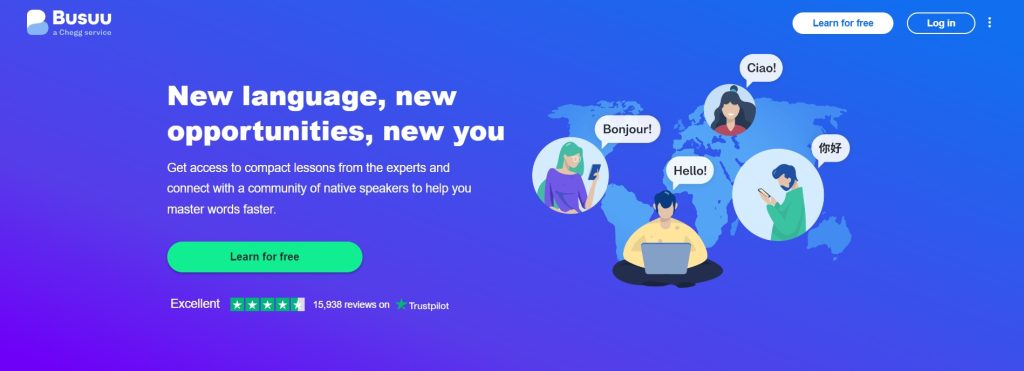
Busuu’s Complete French course covers A1–B2. It also lists separate French pronunciation, travel, business and Life in France material.
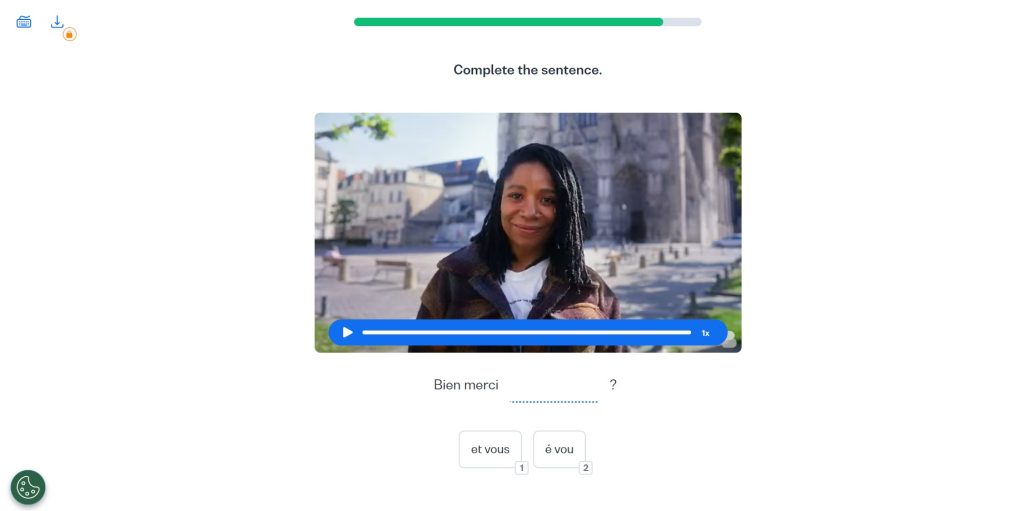
Busuu features a personalized learning plan comprised of lessons that include practice with listening (both audio and video are used), vocabulary, and grammar. The app is also known for allowing users to record responses to certain exercises and ask other users who are native or fluent speakers their opinion.
You can find more information in our in-depth Busuu review. Or read on for my major takeaways from the app.
What’s good about Busuu
- Compared to a lot of other language learning apps, Busuu sort of feels like a one-stop shop. You’ve got listening practice with both audio and video. You have five-minute lessons on a variety of grammar topics, as well as a variety of review activities.
- Lessons follow one another in an orderly fashion. When you open Busuu, you see its lessons neatly organized into Chapters (groups of lessons). You start at beginner level and build on what you learn.
- Excellent grammar material. Busuu’s Grammar section lets you learn or review tons of French grammar concepts. Each topic is clearly and concisely explained, and you can skip to any one you want, which is extremely helpful for users who already have a good grasp on French and are using the app to review or get more practice.
- Many of the example words and phrases in these lessons feature videos of native French speakers saying them. This adds a human touch (not to mention good listening practice) to vocabulary learning.
- Users can ask Busuu community members who are native or fluent speakers of French what they think of their pronunciation.
- The app uses everyday spoken French well. Like Copycat Cafe, Busuu focuses on everyday spoken French. The audio and videos on the app generally featured good examples of it.
- There are even a few sections that teach you fun expressions from other French-speaking countries and cultures, which was a neat extra.
- CEFR-organized French curriculum: A1–B2 content gives the course a clear progression.
What’s not good about Busuu
- Busuu now offers AI Conversations across its Complete French course on mobile. A limited number of tries is available before Premium Plus is required. These are simulated scenarios, not live human conversations.
- Community feedback is asynchronous: corrections depend on who responds. A useful correction can come from a native or fluent speaker, but the detail and quality will vary by person.
- Lessons often feel too short. Busuu’s lessons, which usually take 5-10 minutes each, sort of feel like they run through new concepts and don’t reinforce them enough, at least not to my liking.
- I found the practice and review options too limited in my earlier test, especially for speaking. Busuu has since added AI Conversations and automated speaking feedback, which are relevant if that was also your concern.
- Automated grading limits which answers are accepted. Even when another answer would make sense, an app exercise may only recognize the responses it was designed to accept.
- Speaking features sometimes had trouble recognizing my microphone during my test.
My take: Busuu is comprehensive and well-structured for grammar and listening. It now has AI conversation too. If you prefer a routine built around listening to dialogue, copying phrases and then chatting, Copycat Cafe offers that approach.
How much does Busuu cost?
Busuu offers both a free and premium version.
Free Version (Basic):
Busuu has a limited free tier with access to the essential course, community feedback, and basic progress tracking. Premium tiers add more review and study features.
The US App Store lists several purchase offers:
- Monthly: labeled options include $6.99, $9.99 and $23.49.
- Annual: 12-month Premium options include $70 and $138.99; a 12-month Premium Plus option is $139.99.
Premium adds review tools, offline learning, an ad-free experience and certificates where available. Premium Plus adds AI Conversations and pronunciation feedback. French speaking practice includes word highlighting; Busuu’s more detailed AI explanations are currently documented for English and Spanish courses, not French.
Check Busuu’s official website and the checkout screen for the current price and plan terms in your region.
Rosetta Stone
Rosetta Stone’s current consumer product is Sapphire, while its support site still has a separate Classic section. When I reviewed Rosetta Stone, it was still on the earlier version.
The Rosetta Stone app focuses first on teaching the fundamentals of a language. In the United States, learners can also buy personalized 30-minute tutoring through Wyzant in packages of 5 or 10 sessions.
What’s good about the Rosetta Stone app
- Appealing for visual learners, with its use of words matched with images in an immersive experience to help you memorize vocabulary. Other aspects of Rosetta Stone’s method also lean more towards the visual, as well.
- Features structured, thematic lessons, rather than more random, fun-oriented random prompts and exercises, making it appealing to learners who appreciate structure and a no-nonsense approach.
- The earlier version included video and lesson extras. Today, tutoring and live-lesson access depends on account type and region, so check what your package includes.
- TruAccent provides speech-recognition feedback. Sapphire also has Chat Missions, which are typed AI conversations opened in a browser.
What’s not good about the Rosetta Stone app
- I preferred apps with more emphasis on extended listening. Rosetta Stone does include listening and speaking exercises, so this is a preference about its balance of activities.
- The audio felt less natural to me. In the lessons I tried, the speakers sounded slower and more formal than the everyday French I wanted to hear.
- I wanted more intensive grammar explanations in the version I reviewed.
- One-to-one tutoring costs extra. The current US consumer offer uses Rosetta Stone-certified tutors through Wyzant.
My take: Rosetta Stone works well for visual, structured learners. If you prefer practicing everyday dialogues at both slow and normal speeds, Copycat Cafe is worth comparing.
How much does Rosetta Stone cost?
Rosetta Stone’s current website emphasizes monthly and annual Sapphire subscriptions.
The current website lists these consumer subscription prices:
- Monthly: $19.99/month
- Annual: $159/year before any promotion
Current monthly and annual consumer plans include access to all 25 languages. Rosetta Stone runs frequent sales, so check the price shown at checkout before purchasing.
The website advertises a 14-day money-back guarantee. Sapphire’s setup guide also describes a one-time 7-day trial that becomes a monthly subscription unless canceled. Check the terms of the plan you choose.
Rocket French
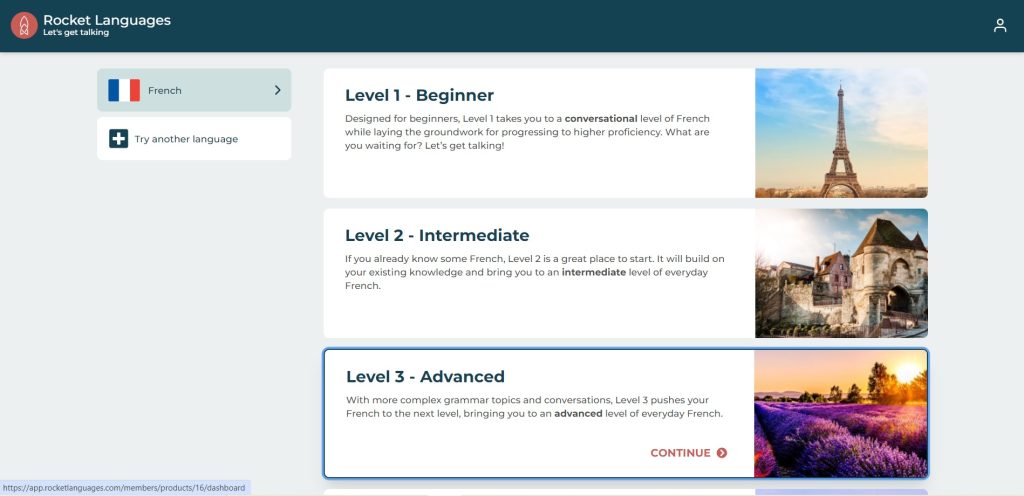
Rocket French is an app that takes a fun but fairly thorough approach to language learning, with two sections of lessons.
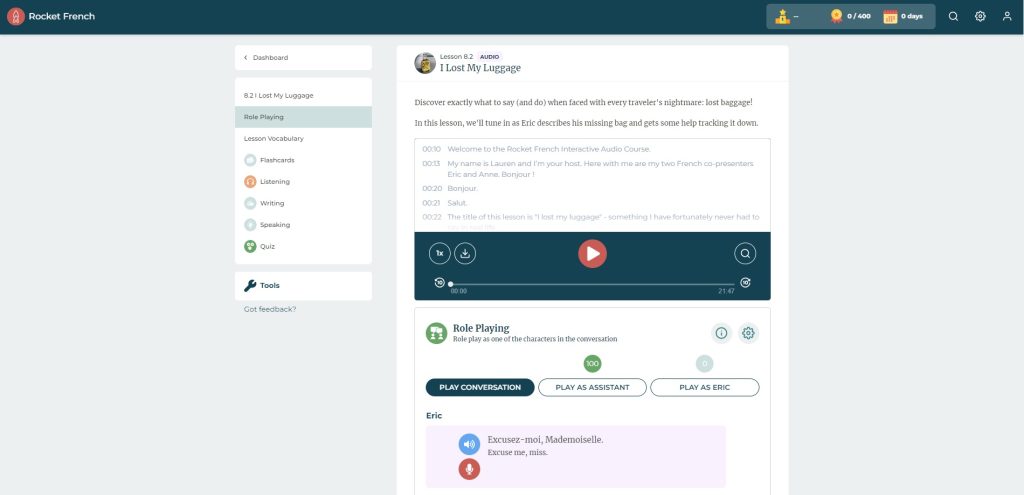
First, there’s audio, where you’ll study dialogues and build vocabulary, grammar, listening, and speaking skills based on those.
Then there’s a language and culture section featuring information about not only French culture but additional grammar information.
Although their structures are a bit different, this approach is similar to some other apps, such as Copycat Cafe.
You can find more information in our in-depth review of Rocket French. Or read on for my major takeaways from the app.
What’s good about Rocket French
- Rocket French includes a specific section for additional grammar information, and culture! The latter is such an important part of language that’s often neglected by language learning apps, or only mentioned in passing.
- Audio lessons feature fun, everyday dialogues and exercises that build on these. For instance, you can listen to a dialogue and then take part in it, with speech recognition checking your pronunciation.
- Rocket Languages also has French discussion threads, including grammar questions answered by community members.
What’s not good about Rocket French
- In the lower-level audio reviewed earlier, Benjamin Houy noticed a slight non-native accent from one dialogue participant. I would try the sample audio and decide whether the mix of voices suits you.
- It’s not as visually appealing as many other French learning apps, so if ~aesthetic~ is important to you, that might be an issue.
- The lessons I tried took around 20–30 minutes, which could be difficult if you do not have much time for each session.
My take: Rocket French is comprehensive, with useful culture lessons. If you prefer shorter sessions focused on speaking, Copycat Cafe’s conversation lessons are another option.
How much does Rocket French cost?
Rocket French sells lifetime course access through one-time purchases, with an installment option for the full bundle. That is access under its terms, rather than ownership of the software.
The French pricing page lists these USD prices before applicable tax:
- Level 1: $149.95, with 138 hours of lesson time advertised by Rocket.
- Levels 1 & 2: $299.90.
- Levels 1, 2 & 3: $449.85.
Payment Plans:
- A six-month payment plan is available for the three-level bundle; confirm the installment amount and total at checkout.
Rocket Languages frequently runs promotions, so the checkout price may be lower than the standard list prices above.
Rocket offers a free sample trial and advertises a 60-day guarantee for direct purchases. Apple handles refund decisions for iOS purchases. Check the offer and platform before buying.
Duolingo
Duolingo is a learning app that offers courses in more than 40 languages, as well as courses in math, music, and chess.
You can use it as a web app on your computer or you can download it onto your mobile device.
Duolingo French offers practice in areas like vocabulary, listening, reading, writing, and speaking. To a certain extent, there’s grammar learning, as well, although I found the explanations included in the “guidebook” before each lesson to often be too cursory and not serious enough.
The interface and lessons are fun and have a cartoonish, whimsical aesthetic.
For more information, check out our in-depth review of Duolingo. Or read on for my major takeaways from the app.
What’s good about Duolingo
- Duolingo makes learning feel fun and personal, with a cast of recurring characters that crop up in examples or just to encourage you as you learn. They even send you emails or messages to keep you motivated. Cynical, sort-of Goth teenager Lily quickly stole my heart, personally.
- On a more practical level, the characters’ diverse backgrounds and personalities mean that each has a different voice and inflection, which is helpful for listening practice.
- It’s addictive. I frequently come across students who have used the app every day for years and are very proud of their “streak”. This makes Duolingo a great choice if you struggle with motivation.
- Lessons move along at a good pace and are varied, especially as you get into higher levels.
- The app tries to touch various bases of language learning, incorporating reading, writing, listening, and speaking.
What’s not good about Duolingo
- While many of us (including me) like Duolingo’s vibe, others, including Copycat Cafe’s Benjamin Houy, think its fun and whimsical approach can be a disadvantage. For Benjamin, a lot of the vocabulary you learn is of dubious usefulness. Sure, learning how to say things like “I’m a cat” or “This is my first cow” is fun but when will you ever say things like this in real life? Doubtful.
- I found the grammar explanations too brief for my tastes. Duolingo does teach grammar through exercises and Guidebooks, and Explain My Answer is now free for most learners in supported courses, including French.
- In the exercises I tried, some answers were rejected even when another wording seemed reasonable.
- Ads seem to get more present the more you use the app. On the first day, I think I only had an ad or two for Duolingo’s paid version, but by the fourth day, I was getting video ads at times. These weren’t terribly invasive (they didn’t pop up in the middle of an exercise, for instance), but it still felt strange and distracting.
- I wanted more French cultural context. Some examples in my test used language that felt too informal for the situation, rather than the polite forms I would have expected.
My take: Duolingo is great for building a daily habit. Its Max tier now adds AI conversation practice, while Copycat Cafe offers a different routine built around copying everyday dialogue before chatting.
How much does Duolingo cost?
Duolingo’s core language courses are free. Optional Super and Max subscriptions add paid features.
Free version: core lessons include ads and practice limits. Duolingo is rolling out an Energy system; some accounts may still have hearts. Free access does not mean unlimited uninterrupted practice.
Paid options:
- Super removes ads and gives unlimited Energy. The US App Store lists several Super purchase amounts without consistently stating their billing periods, so check your account’s monthly, annual or family offer before subscribing.
- Duolingo Max adds Roleplay and Video Call with Lily in supported French courses. A guided Video Call with Falstaff is also rolling out on iOS. Availability depends on course, platform and rollout.
Duolingo has also expanded free practice and explanations. If those were your main reasons for upgrading, compare your current free account with the paid offer before deciding.
The App Store advertises a 14-day Super trial for eligible users. Confirm when billing starts and cancel under your purchase channel’s rules if you do not want to continue.
Preply
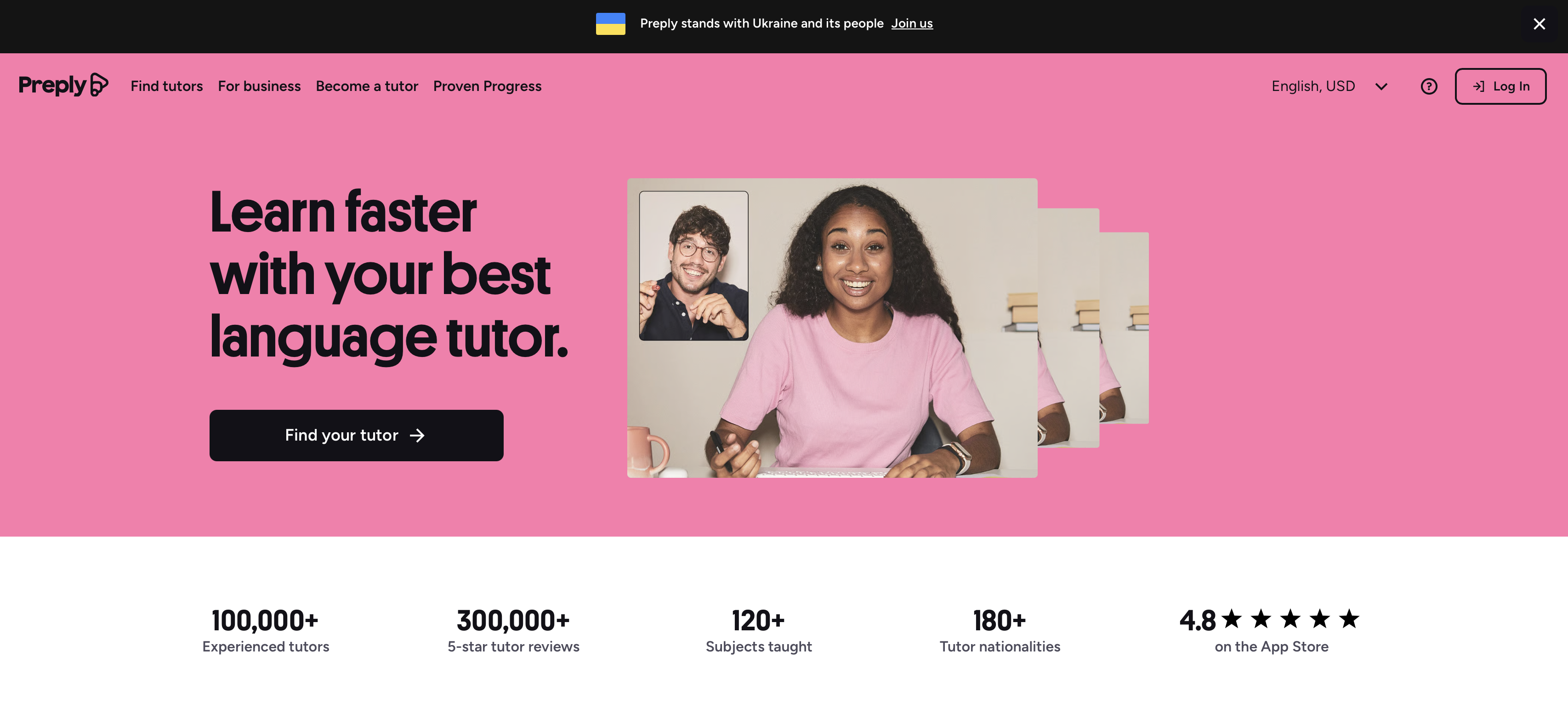
Preply isn’t an app in the traditional self-study sense, but it deserves a spot here because it connects you with a live tutor for video lessons. You can look for help with conversation, work, exams or relocation, and discuss the plan directly with your tutor.
You begin with a paid trial lesson to meet the tutor and discuss your goals. If you continue, you choose a subscription that renews every 28 days. The core service is live teaching, and Preply also advertises some AI extras.
What’s good about Preply
- Real conversation from the start: you speak with a person who can respond to your questions and adjust the lesson.
- A broad choice of French tutors: profiles show specialties, languages, prices and availability, so you can compare your options.
- Personalized lessons: discuss pronunciation, interviews, grammar or another goal with your tutor.
- A regular routine: scheduled lessons can help you make room for practice.
- Options for different levels: check the tutor’s profile and discuss your level during the trial.
What’s not good about Preply
Live lessons need a reliable internet connection and time in your schedule. Preply is not built around the same streaks and game-style rewards as Duolingo, so it may feel more like a class. Cost depends on your tutor’s rate and lesson frequency; compare the total for a 28-day cycle with your app budget.
My take: Preply is one of the strongest options if you want personalized live French tutoring and can commit to scheduled sessions. If you would rather practice speaking on your own schedule, Copycat Cafe is a more self-paced alternative because it combines structured conversation lessons with pronunciation feedback without requiring you to book a tutor.
How much does Preply cost?
The trial lesson is paid and can last 25 or 50 minutes. Afterward, subscriptions start at four 50-minute lessons per 28-day cycle, or equivalent shorter sessions. Unscheduled lessons can expire at renewal, so choose a frequency you can use. See the French tutor listings for current rates and check cancellation, rescheduling and tutor-transfer rules before subscribing.
Quick Feature Comparison
To help you compare at a glance, here’s how these apps stack up on key features:
| App | Pronunciation Feedback | Audio and speed options | AI Conversation | Price examples (USD) | Best For |
|---|---|---|---|---|---|
| Copycat Cafe | 0–100 pronunciation score on every word | Slow and normal lesson audio | Text or voice-call Copy | $174/year; $29/month | Speaking |
| Langua | Mode-dependent; mixed in our test | Adjustable playback speed | Chat and Call; plan limits apply | Communicate $149.99/year; Unlimited $199.99/year on US iOS | AI chat focus |
| Natulang | Recognized-text comparison in our test | Spoken prompts | Custom Free Dialogs | US iOS: French lifetime $119.99; Premium $9.99, billing period not shown | Spoken dialogue practice |
| Pimsleur | Voice Coach | Core audio; slower Speak Easy playback | French Conversation Coach beta; All Access iOS | All Access: $20.95/month on web; $131.99 or $164.99/year on US iOS | Audio learners |
| Babbel | Speech recognition | Slow playback in supported activities | Speak beta on mobile; American English display language | $107.40/year website offer | Varied exercises |
| FluentU | Speaking activities | Authentic videos; adjustable playback | AI Tutor; plan limits apply | Web offers: Plus $143.99/year; Super $199.99/year | Video immersion |
| Busuu | Community; automated tools on Plus | Audio and native-speaker video | Mobile Conversations; Plus after limited tries | Premium $70 or $138.99/year; Plus $139.99/year on US iOS | Grammar + variety |
| Rosetta Stone | TruAccent | Lesson audio; felt slow when I used it | Typed Chat Missions | $159/year or $19.99/month on web | Visual learners |
| Rocket French | Speech recognition | Recorded dialogues; practice both roles | Scripted role-play | Web: $149.95–$449.85 one-time, before tax | Comprehensive |
| Duolingo | Speech exercises; limited diagnostic detail | Characters and lesson audio | Max on supported courses/platforms | Free core lessons; paid price shown in account | Gamification |
| Preply | Live tutor feedback | Live conversation with your tutor | Live tutoring | Tutor rate × lessons per 28-day cycle | Personalized live speaking practice |
Comparison notes: Prices are examples from the channels named above, checked October 17, 2026. Annual figures are billed for the year. Feature availability can vary by platform, course and plan.
Your Next Step: Find Your Perfect App Match
Start with the app that matches your main goal, and use its free lessons or trial to see whether it suits you.
Start with apps that match your primary goal:
- “I want to speak French confidently” → Copycat Cafe for dialogue-based practice, or Pimsleur for an audio-led routine
- “I want fun, gamified practice” → Duolingo (free) or Babbel (varied exercises)
- “I want immersive video learning” → FluentU’s authentic French content
Most apps on this list offer a free option, trial, or money-back guarantee:
- Copycat Cafe: 7-day free trial and a 30-day money-back guarantee on your first payment.
- Duolingo: Core courses are free
- Babbel: free first lesson in each course; check refund terms for your purchase channel.
- Pimsleur: 7-day subscription trial for eligible new users.
- Preply: paid trial lesson. See the other sections for their access and refund terms.
Learning a different language? See our guides to the best apps to learn German and the best language learning apps by goal.
Frequently asked questions
What is the best app to learn French in 2026?
The best app to learn to speak French is Copycat Cafe (we make it). You hear an everyday conversation, say each line aloud with a pronunciation score on every word, then use it with Copy, your AI conversation partner. For free lessons, choose Duolingo. For grammar and short lessons, choose Babbel, and for a live tutor, choose Preply.
What is the best free app to learn French?
Duolingo is our pick for free core French lessons and a daily learning habit, although ads and practice limits apply. Busuu also has free course content and community feedback. Babbel offers the first lesson of each course free. Copycat Cafe has no free plan, but you can try it with a 7-day free trial.
How much do French learning apps cost?
Prices vary by plan and purchase channel. Copycat Cafe costs $174 a year ($14.50 a month) or $29 a month. The website offers checked for this update include Babbel at $107.40/year and Rosetta Stone at $19.99/month or $159/year. Duolingo has free core courses, Rocket French sells lifetime course access, and Preply charges according to your tutor and lesson frequency.
Is Duolingo good for learning French?
Yes, especially for building a daily habit and practicing vocabulary, listening and sentence patterns. I wanted more detailed grammar and cultural context in my test. The current app has expanded explanations, and Max adds AI speaking practice on supported French courses. I would still make room for conversations outside the app.
Does Duolingo still use hearts?
Some accounts may still show hearts. Duolingo is rolling out Energy for free practice, so the system you see depends on your account and platform. Super removes ads and includes unlimited Energy; free core lessons still have practice limits.
Can a French learning app actually make you fluent?
An app gives you daily practice, and fluency also comes from listening, reading and talking with people. I would combine an app with real conversations, then judge your progress by what you can understand and say in real situations.
Which French app is best for speaking and pronunciation practice?
Copycat Cafe is our pick. You copy everyday dialogue aloud with a pronunciation score on every word, then practice conversation with Copy, your AI conversation partner. Pimsleur suits learners who prefer audio-led repetition and Voice Coach, while Babbel combines speech recognition with guided AI scenarios on supported mobile accounts. For feedback from a person, consider a French tutor on Preply.
Good luck with your French! And if you have questions about any of these apps, feel free to reach out.
More resources:
- Free French pronunciation practice tool: hear a phrase and practice copying it aloud
- Best apps to learn Spanish
- Best AI language learning apps: AI-powered options
- Best Duolingo alternatives
- Duolingo Max review: is it worth it?
- French conversation practice: best apps and sites
- Best way to learn French: methods compared
- Language learning affiliate programs: which programs are worth promoting for creators