
Disclosure: This post contains affiliate links. If you buy through them, we may earn a commission at no extra cost to you.
You understand more Portuguese than you can say. Maybe you've done months of an app, or you've sat at a Brazilian family lunch catching every third word. Then someone turns to you and asks a question, and the sentence you need won't come.
So what should you practise, and how often, to get that sentence out next time?
Should you learn Brazilian or European Portuguese?
Learn the Portuguese of the people you want to talk to. If they're in Brazil, learn Brazilian Portuguese; if they're in Portugal, learn European. The two understand each other, but sounds and everyday words differ enough to confuse a beginner: Brazilians say Eu te amo and cachorro, while Lisbon says Amo-te and cão. Pick one at the start, and make sure your course, your podcasts and your tutor all match it.
Every day: hear it, then say it out loud
Put most of your time here, because this is where the sentences you'll need get into your mouth before anyone asks for them. Listen to a short everyday conversation, then say its lines aloud until they come out without you building them word by word.
Start with lines you'll actually use. Bom dia! Eu queria um café pequeno. ("Good morning! I'd like a small coffee.") is more useful on day one than a list of nouns, because you can say it the next morning at a padaria. Greetings like Tudo bem? ("All good?") and its answer, Tudo, e você?, come next.
Check how you sound, too. Brazilian Portuguese has sounds English doesn't: nasal sounds in bom and pão, and the soft "j" or "ch" that d and t take before an "ee" sound in most of Brazil, so dia sounds close to "JEE-ah". Record yourself and play it back next to the original, and you'll hear which words slipped.
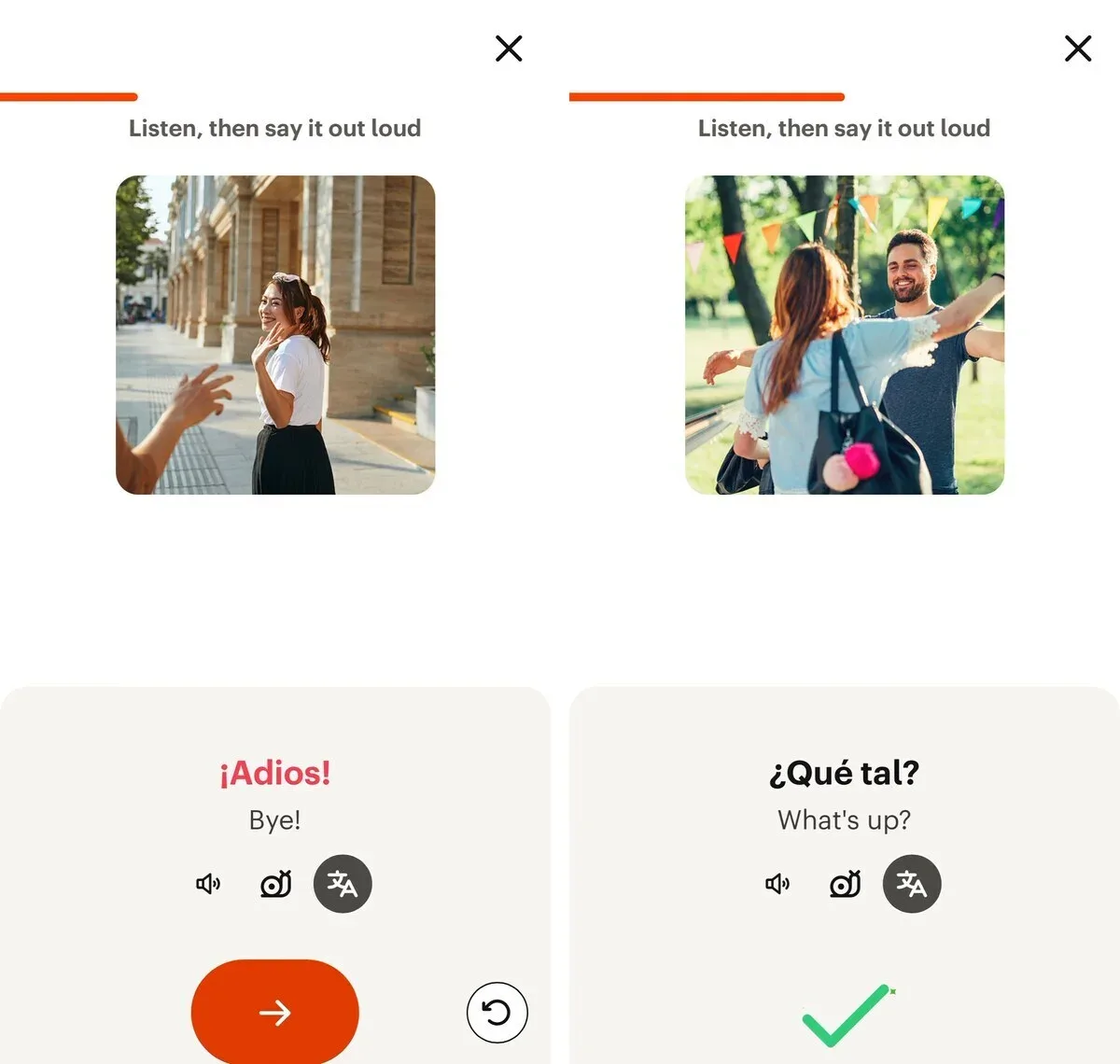
If an app checks your speaking, test the check before you trust it: say a line badly on purpose and see whether it notices. When Benjamin, our co-founder, tested Babbel's Latin American Spanish course for our roundup of Spanish apps, its speaking review caught "Bonjour" said for ¡Adiós! but accepted a ¿Qué tal? he mispronounced on purpose.
A few times a week: follow one structured course
A course stops you from wondering what to learn next. It brings in ser and estar, the past tenses and the rest of the grammar in an order that builds. Pick one and finish its level before you shop for another. Our guide to the best apps to learn Brazilian Portuguese compares the options by goal, from Duolingo's free course to Babbel's grammar tips and Pimsleur's audio lessons.
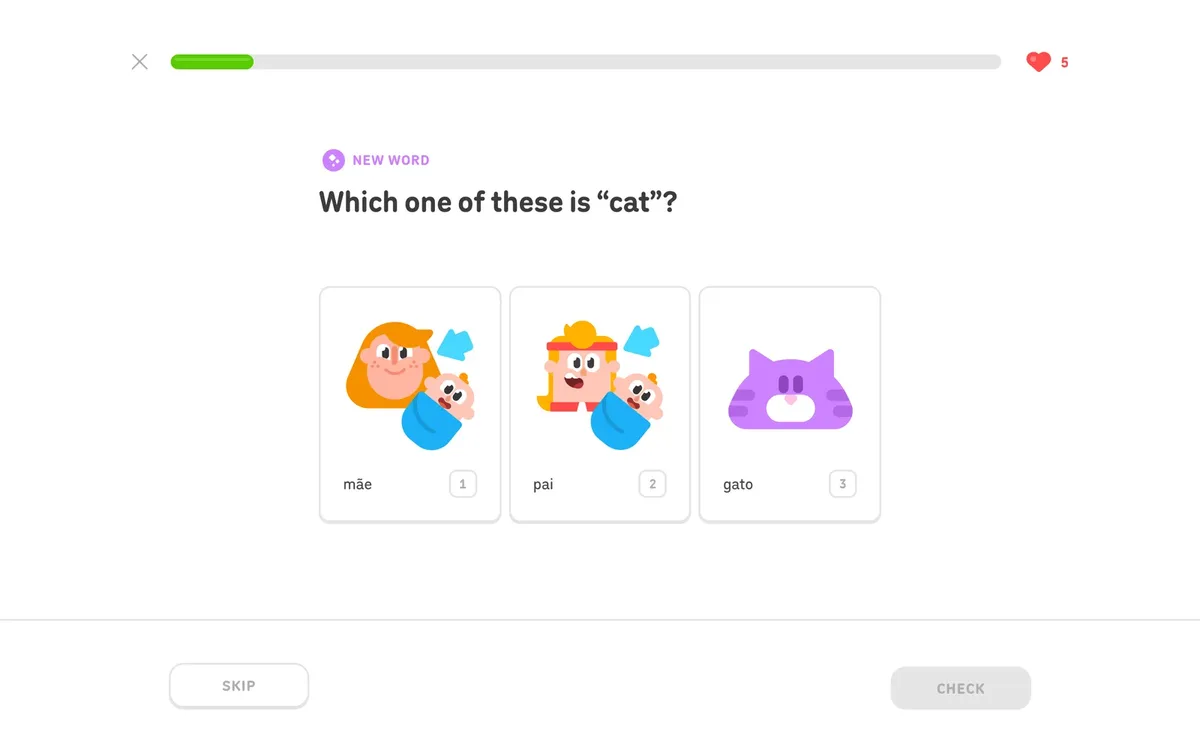
If you already use Duolingo, keep it for the habit, but don't count on it to get you speaking; our Duolingo for Portuguese review explains why. When we took the first lesson of its Portuguese course, all 13 exercises were taps on single words like gato and cachorro, with nothing to type or say aloud.
Once or twice a week: use it in a real conversation
Practising alone gets lines into your mouth. A conversation makes you pull them out when you weren't expecting the question. A tutor from Brazil on Preply or a patient friend works well. An AI conversation partner lets you practise whenever you have ten minutes, without booking anyone.
Use what you copied that week. If you practised ordering at the bakery, order at the bakery in the conversation. When a question catches you out, write it down and copy it the next day.
What to skip
- Mixing varieties: a European podcast on top of a Brazilian course means learning two pronunciations at once.
- Waiting until you're ready to speak: you'll be ready because you spoke, not before.
- Only tapping and reading: recognising tudo bem on a screen and answering it in half a second are different skills.
Where Copycat Cafe fits
We built our app, Copycat Cafe, around the daily part of this plan. Our Brazilian Portuguese course has 200 everyday conversations from A1 to B2. You hear each one, rebuild its lines by ear, say every line aloud and get a 0–100 pronunciation score on every word. Then you use the same Portuguese with Copy, your AI conversation partner. Notes on each lesson explain the grammar and the Brazil behind the scene, from the padaria to the feira. It runs in your browser, and it's light on reading and writing, so pair it with a course like Babbel if you want written grammar practice.
Copycat Cafe costs $104.40 a year ($8.70 a month) or $17.40 a month until December 1, 2026 (40% off for Black Friday), with a 7-day free trial and a 30-day money-back guarantee on your first payment. See the pricing page for prices in your currency.
Fifteen minutes today, out loud. The next time someone at that lunch turns to you with a question, you'll have said the answer before.