
Disclosure: This article contains affiliate links. If you sign up through them, we may earn a commission at no extra cost to you. This doesn't influence our review.
Note: Prices are in USD. App pricing and features change frequently. All prices mentioned in this article were verified in July 2026.
Latest update: July 2026 — we refreshed Babbel and Duolingo pricing, noted that Duolingo’s “Explain My Answer” feature is now free for all learners, and added Babbel’s new AI conversation feature, Babbel Speak.
Babbel and Duolingo are two of the most popular French learning apps on the market today. But which one is better?
Let’s compare Babbel and Duolingo to see which one you should use to learn and practice French.
Which is better: Babbel or Duolingo?
Babbel and Duolingo are similar in many ways, but also very different.
Both Babbel and Duolingo:
-
are available as a mobile and a web app
-
cover areas like French vocabulary, grammar, writing, listening, and speaking
-
feature varied exercises for learning, practicing, and reviewing French
But there are some important ways in which they differ, including:
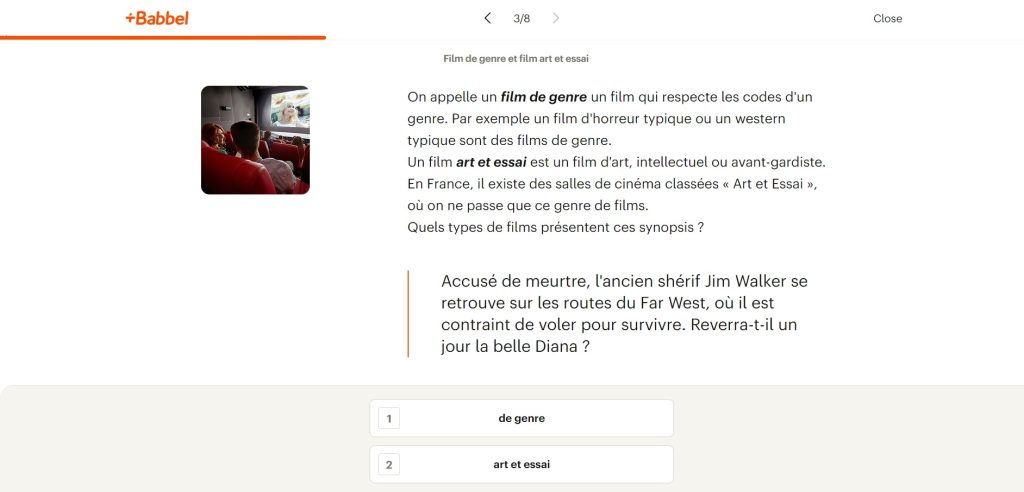
- Babbel goes more in-depth into most of the subjects covered than Duolingo does. And unlike Duolingo, it features cultural lessons and information, a very important part of language learning.
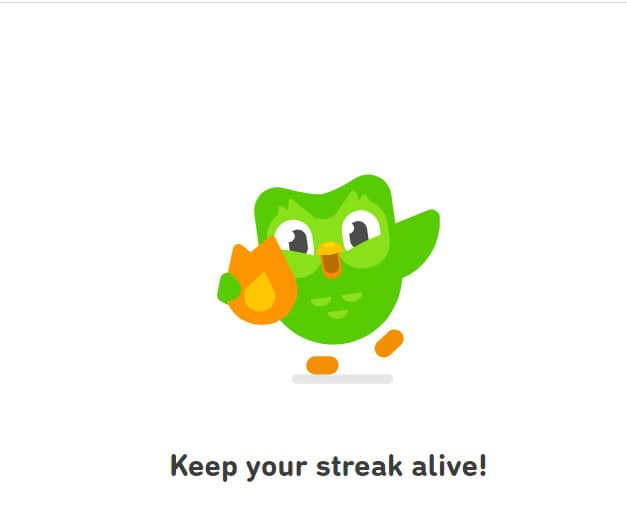
- Duolingo has a fun, joyful, and often funny interface, with many characters you’ll meet and interact with along the way. It’s also famous for keeping users motivated, with its concept of “streaks” (unbroken days of practice) and other incentives. But it falls short in grammar and speaking practice, and also offers no French culture lessons or information.
Overall:
-
Its varied exercises, joyful and playful tone, characters, and streaks, will keep many learners engaged with Duolingo.
-
Babbel takes a more traditional approach to learning French than an app like Duolingo. But its varied exercises and interesting and helpful cultural insights keep things far from boring.
So is Babbel or Duolingo better to learn French with? It ultimately depends on you. How do you like to learn? What are your goals?
Read on for more information about how Babbel and Duolingo compare. And if you want more information about each of these apps, feel free to check out my in-depth review of Babbel and my in-depth review of Duolingo.
Where both apps fall short
Here’s what neither app fully addresses:
Babbel’s pronunciation feedback is quite lenient. You’ll often get a checkmark even if your pronunciation needs work. Read our full Babbel review for details.
Duolingo’s speaking practice focuses on recognizing that you said something, not whether you said it correctly. You’ll learn to say phrases, but won’t know if French speakers would actually understand you. See our complete Duolingo review for more.
What both lack:
- Precise pronunciation scores you can track over time
- Audio at both slow and natural speeds throughout (Duolingo offers a slow “turtle” replay on some listening exercises, but Babbel’s dialogues play at one speed)
- Deep conversation practice in the core lessons — though both now offer paid or beta AI conversation features, covered below
Babbel vs Duolingo
Here are some of the most important ways Babbel and Duolingo measure up, based on some of the most important things you should consider when choosing a language learning app.
Format
Babbel: Available as a web app (can use on computer or mobile device) or a mobile app.
Duolingo: Same.
Subject areas covered
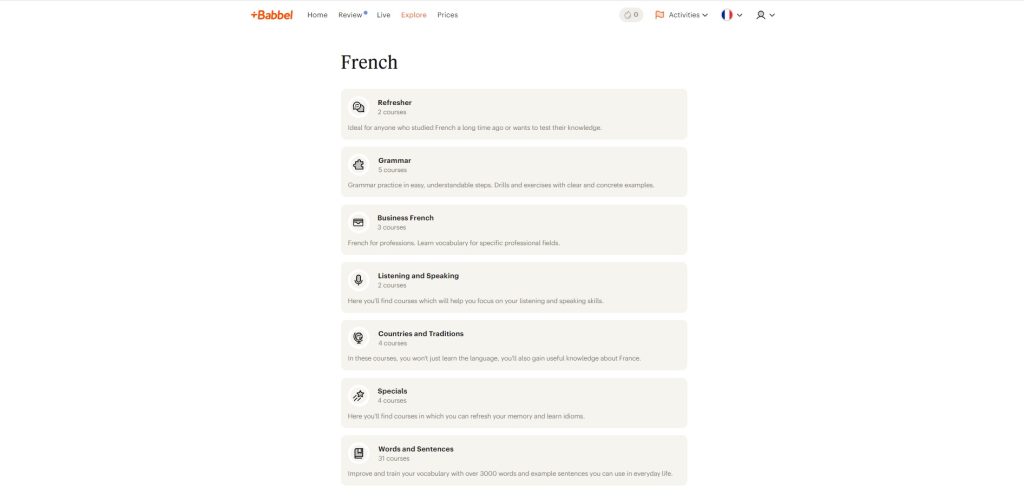
Babbel: Listening, reading, speaking, writing, with grammar and culture-related information and explanations, as well. Babbel’s lessons are organized sequentially, but you can also search for lessons on specific subjects or topics, a feature I find really neat.
Duolingo: Listening, reading, speaking, and writing.
Learning levels
Babbel: Beginner to advanced — Babbel’s French course covers CEFR levels A1 through C1.
Duolingo: Beginner to upper intermediate — the French course is aligned with the CEFR through level B2. That said, for a solid understanding of the fundamentals of French grammar, absolute beginners may need more information than what they learn on Duolingo.
Lesson length
Babbel: Each lesson takes roughly 10 minutes to complete.
Duolingo: Lessons can take from 5-20 minutes to complete. You can choose how long you want your lesson to take by toggling your Daily Goals.
Number of lessons
Babbel: Each learning level is made up of around 5-10 courses, which consist of around 10 lessons (sometimes a few more, sometimes a few less) each.
Duolingo: Duolingo French has a massive amount of lessons. According to the duoplanet blog, Duolingo French features over 200 lessons.
Access to different learning levels
Babbel: Regardless of your learning level, you have access to all of Babbel’s course levels in the language you’re studying. So if you want to start learning or revising by doing something easier, or if you want a challenge or to test your current French abilities, that is absolutely an option.
Duolingo: You can’t skip ahead to different levels without taking a test. But Duolingo lets you go back to levels you’ve completed. You can also access guidebooks for later lessons, no matter what lesson you’re currently on.
Authentic audio
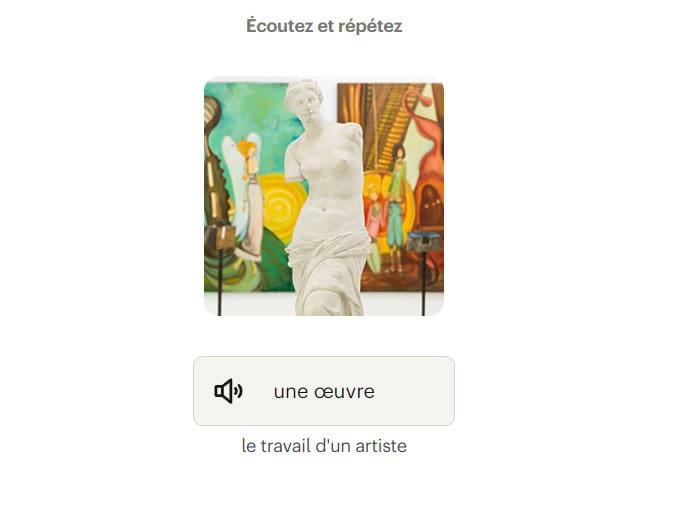
Babbel: All audio on Babbel is provided by native French speakers.
Duolingo: Audio on Duolingo depends on the Duolingo character who’s speaking. Many will speak standard, mainland French, but others will have at least a slight accent, or will have their own particular pronunciation and inflection quirks. This has its advantages and disadvantages. It keeps you from only hearing standard French, but then again, you may not only hear standard French when you start using your French in the real world.
Pronunciation checker
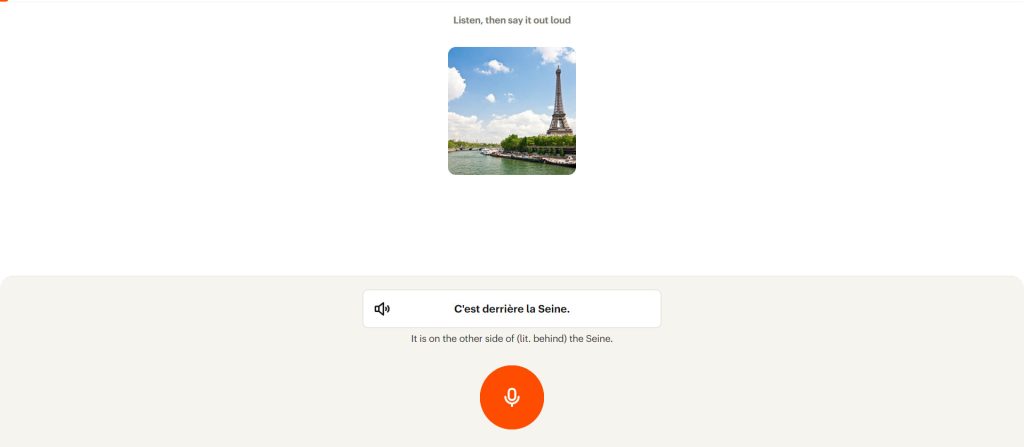
Babbel: Includes AI pronunciation checker as part of speaking exercises. Read our detailed Babbel review to see how the pronunciation feedback works in practice.
Duolingo: Includes AI pronunciation checking as part of speaking exercises. Our Duolingo review covers the pros and cons of its speech recognition.
Both apps have also been adding AI conversation practice. Duolingo Max is a separate, paid tier that includes Roleplay scenarios and Video Call with the character Lily (French is supported); it’s only available in the mobile apps. Babbel, for its part, has been rolling out Babbel Speak, an AI conversation practice feature that has been in open beta since September 2025 — it includes French and is also mobile-only.
The limitation of both: They primarily check if you said something, not if you said it correctly. Neither provides a numerical score (like 0-100%) to track improvement over time.
Interactive dialogues
Babbel: You can’t do much with dialogues besides listen to them. For instance, you’re not able to slow down audio, or to listen to audio at both slow and normal speeds.
Duolingo: While there are lots of speaking and listening exercises, not all levels have long dialogues. For higher level learners, though, “Stories” are short dialogues that you can read and listen to. You can replay lines, and you will be required to interact in some way, for example, with fill-in-the-blank or comprehension questions.
Review options
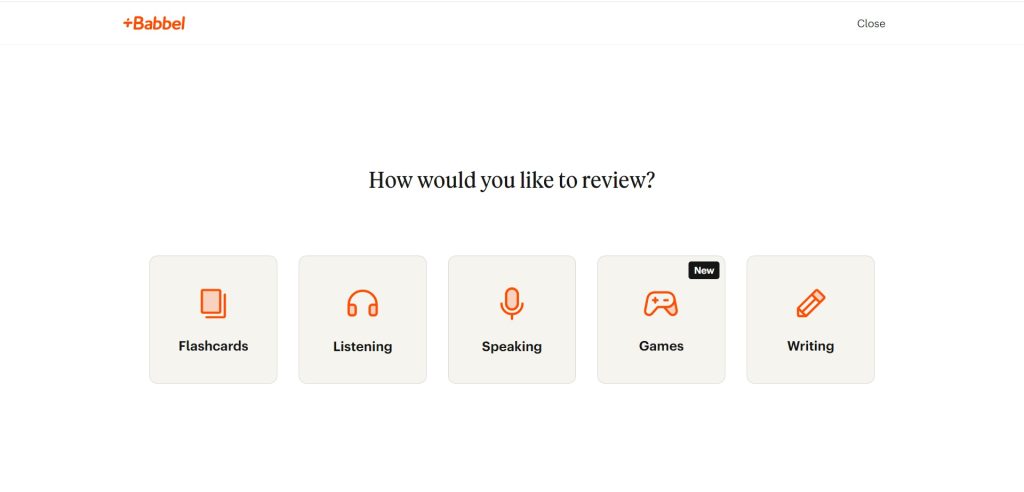
Both Babbel and Duolingo offer varied and helpful review exercises.
Challenging exercises
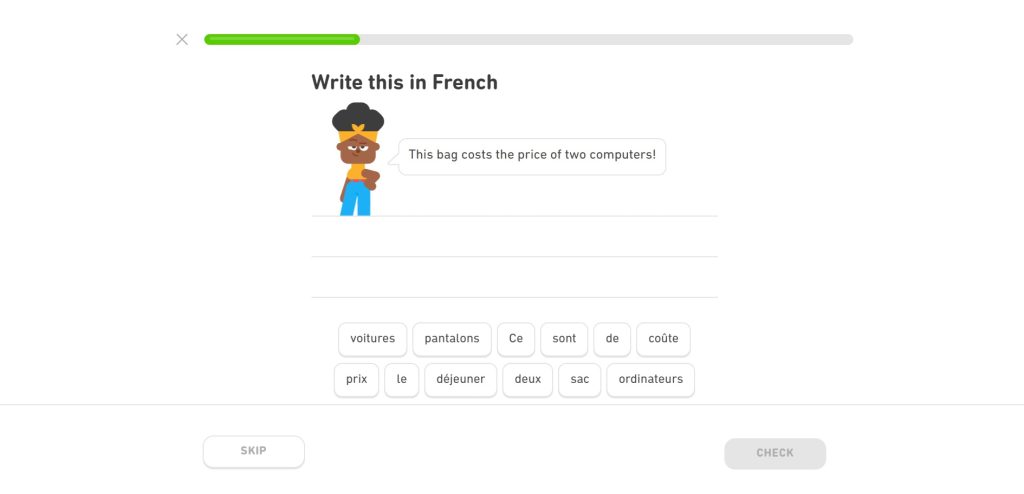
Babbel’s exercises can be challenging.
And don’t let Duolingo’s cute interface fool you. Its lessons can also be challenging.
Teaching style
Babbel: Babbel takes a more structured approach to language learning. The app also does a good job of clearly explaining concepts related to grammar, as well as culture, and building on everything users have learned to help them understand and progress.
Duolingo: Takes a more intuitive language learning approach. There are structured lessons and a learning path to follow, and the app does have a grammar guidebook that will clarify or explain certain concepts (though I personally don’t think it does this well enough in many cases). But the main way to learn with Duolingo is by observing and doing.
This learning technique isn’t unique to Duolingo, and it’s not necessarily something everyone would find negative, but personally, I’ve never been a fan of it, especially if your goal is to attain near-fluency, including grammar proficiency. See enough examples, Duolingo’s creators figure, and you’ll get it. But I’m not really sure that’s true. By the end, you’re expected to know how to conjugate verbs in various tenses, for instance, and I strongly suspect that many longtime users only know how to conjugate for the subjects and verbs they’ve become familiar with through the app’s example sentences.
Interface style
Babbel: Babbel has a simple interface that makes it easy to use, while still looking visually appealing. The app feels friendly and welcoming, but not as zany or cartoony as Duolingo.
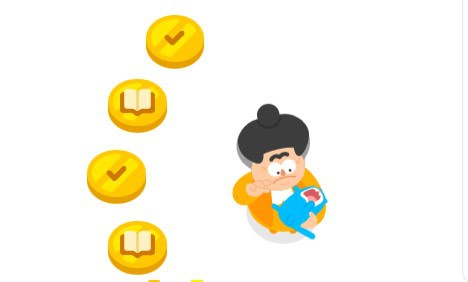
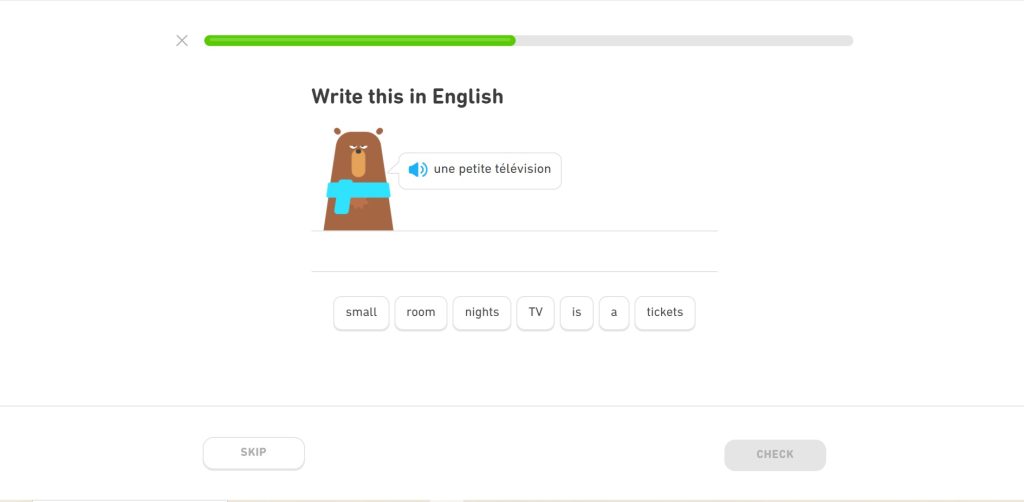
Duolingo: Fun! Visually and in spirit, Duolingo is like a game, with your progress laid out on your screen like a path (sort of a language app version of maps in some Mario games), and points and jewels and such to win along the way. And of course, there’s the app’s famous streaks (days of continuous practice that most users strive to continue unbroken).
But if all of this doesn’t matter that much to you, the app’s cast of cartoon characters just might. Each one has their own personality and style. For instance, my favorite, the cynical, kind-of-Goth teenager Lily, will roll her eyes and grudgingly clap when you get the answer to an exercise right.
How knowledge is applied
Babbel: Teaches you, then shows you how what you’ve learned can be used in real-life situations. For instance, a lesson on prepositions is then applied to a scenario where you ask directions when visiting a French city.
Duolingo: Has a more whimsical, less real-world approach and doesn’t seem to rely on practicality as much as general language learning.
In fact, while some people (like myself), find the app charming, others find it frustrating, since many of the phrases you’ll learn are silly and memorable, but not ones you’re likely to use in real life.
The best things about each app
Babbel:
-
Varied exercises
-
Grammar and culture insights. In some lessons, a little window will pop up on your screen with more information about a grammar concept, or to warn you about a potentially embarrassing faux ami. Some of these tips are about art or culture, as well.
Duolingo:
-
Its whimsical style and cast of characters make learning feel fun, even when exercises are challenging.
-
Motivates users to practice daily. In addition to its famous “streaks” (uninterrupted days of practice) and messages from its characters, Duolingo offers incentives like the game-like rewards system, where you get gems and other items for completing lessons and reaching other goals.
The worst thing(s) about each app
Babbel:
-
Learners who have a hard time committing to a traditional French learning app may find it hard to stick with Babbel, despite its varied exercises and quick lessons.
-
No adjustable audio speeds (can’t slow down dialogues)
-
No dialogue transcripts
-
Pronunciation feedback can be lenient
Duolingo:
-
Grammar explanations are brief at best, and often not particularly clear.
-
Cultural aspects of French, especially the importance of politeness, are ignored.
-
The app is free, which is wonderful, but it includes ads, which might feel disruptive (although these don’t pop up in the middle of a lesson or anything.)
-
You’ll learn whimsical phrases instead of practical French
-
Basic pronunciation feedback (just recognizes you said something, not if it’s correct)
Cost
Babbel:
Babbel offers several subscription lengths, with better value for longer commitments:
US Pricing:
- 1-Month: $14.99/month
- 6-Month: $9.99/month (billed $59.94)
- 12-Month: $7.99/month (billed $95.88)
Lifetime (all 13 languages):
- $299 list price (one-time payment) — it’s frequently on sale for around $170–$200
Babbel runs frequent promotions, so you’ll often pay less than these list prices. Among the subscriptions, the 12-month plan is the best value, at roughly half the monthly rate.
Babbel lets you try the first lesson of every course for free — depending on the language, that can add up to as many as 80 free lessons — and offers a 20-day money-back guarantee on purchases made through its website.
You can check Babbel’s pricing in your region’s currency on Babbel’s Prices page.
→ Read our complete Babbel review for a detailed breakdown of features and value.
Duolingo:
Duolingo is completely free and includes full access to all 40+ languages and lessons.
Free Version: Duolingo’s free tier includes access to all language courses. You’ll see ads, and on mobile your practice is limited by an “Energy” meter, which has replaced the old “hearts” system (the web version still uses hearts). It remains fully functional for long-term learning.
Super Duolingo (Premium):
- Monthly: $13.99/month
- Annual: $95.99/year (~$8/month)
- Family Plan: $119.99/year (up to 6 users)
Duolingo discounts Super heavily during promotions — often around half off the annual plan, especially around the New Year.
Super removes ads, lifts the hearts/Energy limits, and adds personalized practice.
Duolingo Max (AI-Powered):
- Monthly: $29.99/month
- Annual: $167.99/year (~$14/month)
- Family Plan: $239.99/year (up to 6 users)
Max includes everything in Super, plus AI conversation practice: Roleplay scenarios and Video Call with Lily (available for French). It’s mobile-only and offered on a limited set of courses. One change worth knowing: “Explain My Answer,” once a Max-only perk, has been free for all learners on Duolingo’s biggest courses — including French — since January 1, 2026.
→ Read our complete Duolingo review for details on all pricing tiers and features.
Quick comparison table
| Feature | Duolingo (Free) | Babbel (~$96/yr) |
|---|---|---|
| Annual cost | Free | $95.88 (12-month plan) |
| Languages | 40+ | 13 |
| Pronunciation feedback | Basic recognition | Lenient scoring |
| Grammar | Brief guidebook | Detailed explanations |
| Culture lessons | None | Yes |
| Audio speeds | Slow “turtle” replay on some listening exercises | One speed |
| Best for | Daily habit building, multiple languages | Structured learning, grammar focus |
| Gamification | Streaks, XP, leaderboards | Minimal |
Should you choose Babbel or Duolingo for French learning?
As you’ve seen from this review, Babbel and Duolingo both have strengths and weaknesses. Overall, both apps cover a lot of ground, although Babbel goes more in-depth in areas like grammar and also features cultural lessons and information, something Duolingo lacks.
But if you find yourself longing for both Babbel’s more in-depth approach and Duolingo’s fun and engaging one, here’s some good news: Since both apps offer short lessons, and since Duolingo is free, you could use the two of them in tandem to learn and review French!
Choosing based on your goals
Choose Duolingo if you want:
- Free, gamified practice
- To learn multiple languages (40+ available)
- Motivation through streaks and leaderboards
- A fun, casual learning experience
Choose Babbel if you want:
- Structured, comprehensive French learning
- Cultural context and grammar insights
- Varied exercise types to stay engaged
- A more traditional learning approach
Consider adding a conversation-focused app if you want:
- Precise pronunciation feedback with scores
- To practice actual speaking, not just exercises
- Audio at both slow and natural speeds
- Real conversational French practice
Resources to explore:
- Best French learning apps - full comparison
- French conversation practice - speaking options
- Duolingo review - detailed analysis
- Babbel review - in-depth look
Whichever app or apps you choose, good luck in your French learning journey!
This article contains an honest comparison based on real testing. Prices verified July 2026.