
Disclosure: This article contains affiliate links. If you sign up through them, we may earn a commission at no extra cost to you. This doesn't influence our review.
Updated September 30, 2026: We checked current features, pricing and access terms against official sources. The firsthand impressions below come from the author’s original tests.
Duolingo is great for building a daily habit, but if you’ve been using it for months and still freeze up when trying to actually speak French, you’re not alone.
The problem? In my experience, gamified apps can make practice easy to return to, but they do not always give speaking and pronunciation the depth I want. Duolingo now includes speaking and listening practice, while Max includes AI Video Call and Roleplay in supported courses. Duolingo also reported starting to expand Video Call to Super subscribers in 2026. Check your course and account for availability. I still wanted alternatives with different approaches to conversation, feedback, grammar, or vocabulary.
The right alternative depends on the skill you want to practise and the kind of lessons you enjoy.
Below are seven alternatives I tested, plus Copycat Cafe, our own speaking-focused option. The scores out of five reflect my original experience, not a new test of every current feature. Each app has different strengths, so you can choose what fits your learning style.
First, which language are you learning? It changes which alternative makes sense:
- French: If you want a language-specific comparison, see our best French learning apps guide. Check the French features of any app you shortlist here.
- Spanish: The broader comparisons can still help, but course depth and specific features may vary by language. For Spanish-focused recommendations, start with our roundup of the best apps to learn Spanish, or see how Duolingo holds up for Spanish.
- Another language: Copycat Cafe teaches French, Latin American Spanish, Castilian Spanish, Italian, and German. For other languages, look at Ling (its website advertises 70+ languages) or LingoDeer (my grammar pick).
Copycat Cafe
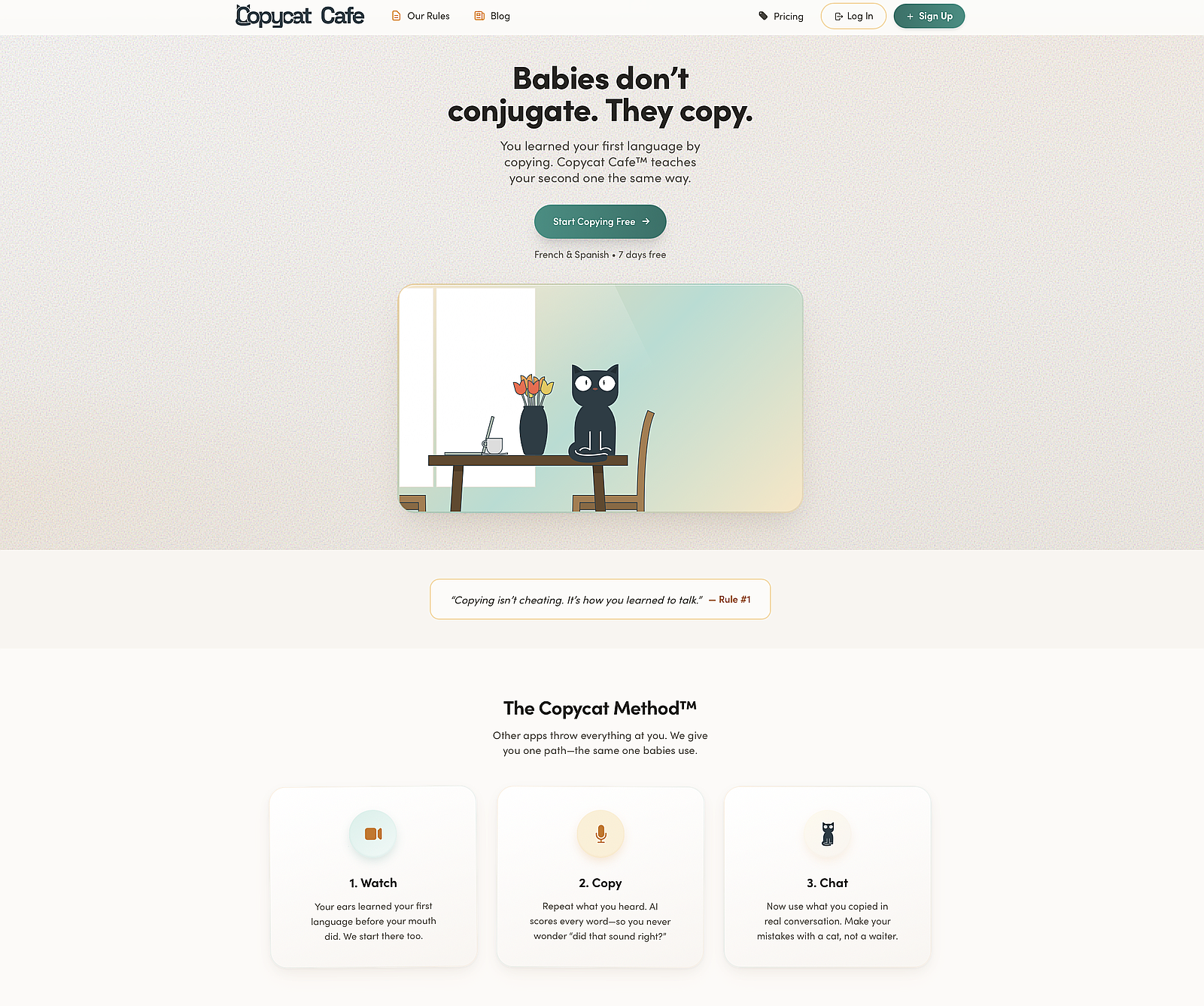
Founder’s note: Benjamin Houy built Copycat Cafe with Nur after becoming frustrated with language apps that made him good at completing exercises but did not give him enough room to speak. He is obviously biased, and his opinion is simple: if conversation is your goal, conversation should be the center of practice.
The core difference: Copycat Cafe’s recommended method is Watch → Copy → Chat. Listen to and rebuild a practical dialogue line, copy it aloud in chunks, then reuse it in an AI conversation. You can also open Chat independently.
What makes Copycat Cafe different from Duolingo
- 200 structured lessons per course, covering practical situations from A1 to B2.
- Slow and normal-speed audio, so you can hear a line clearly before copying it.
- Pronunciation practice: a 0 to 100 score when the recording can be assessed, with focused feedback on the line or chunk you recorded.
- Speech transcription shows what the system recognised, so you can compare it with the intended line.
- AI conversation practice: up to 1,000 normal chat messages per day, plus up to 30 minutes per day in Call mode.
- Five courses in one subscription: French, Spanish (Latin America), Spanish (Spain), Italian, and German.
What Benjamin likes about this approach is its focus. There is less gamified variety and more repetition of useful dialogue. That will suit learners who want to rehearse speaking, but it will not suit everyone.
What’s good about Copycat Cafe
- The recommended listen, copy, and chat routine keeps practice connected to a conversation.
- Slow audio, normal-speed audio, a written line, transcription, and pronunciation feedback let you approach the same sentence from several angles.
- The AI conversation gives you room to respond in your own words instead of choosing only from suggested replies.
- Lessons use practical situations rather than disconnected novelty phrases. That focus is one of Benjamin’s strongest opinions about how speaking practice should feel.
What learners told us:
Stephanie A. says people she interacts with in Paris commented on her improved French after she started the course.
Chris H. credited the course with helping him pass his FIDE exam at B1 oral and A1 written, reporting scores of 92% and 95%.
Rebecca S. said the course gave her more confidence in her pronunciation and usage after about seven weeks. These are individual experiences; see the original learner testimonials.
Who Copycat Cafe ISN’T for
Copycat Cafe is a focused choice, not a complete language-learning universe. It is probably not the best fit if you:
- want textbook-style grammar explanations and lots of written exercises;
- prefer broad gamified variety to deliberate repetition;
- mainly want reading and writing practice; or
- want a language outside French, Spanish (Latin America), Spanish (Spain), Italian, and German.
How much does Copycat Cafe cost?
Copycat Cafe’s Personal plan costs US$174 per year, equivalent to US$14.50 per month when paid annually, or US$29 per month. One subscription includes all five courses. Check the pricing page for your local currency.
Both paid plans begin with a 7-day free trial requiring a payment card. The selected subscription starts and renews automatically unless cancelled. The 30-day money-back guarantee applies to your first payment.
Benjamin’s view is that the app is worth paying for when speaking practice is the part you keep postponing. My advice is less dramatic: compare it with two or three options below and keep the one you actually want to open.
Quick Comparison: Which App Is Right For You?
| App | Best fit from this review | Speaking or pronunciation | Conversation feature | Current price note | Languages |
|---|---|---|---|---|---|
| Copycat Cafe | Focused dialogue practice | 0 to 100 score when assessable; focused feedback | Up to 1,000 chat messages/day; Call up to 30 min/day | US$174/year or US$29/month; card-backed 7-day trial | 5 courses |
| Ling | Broad choice, especially Asian languages | Recording and pronunciation checking in supported courses | Guided dialogue activities | US$89.99 annual web offer; 7-day annual trial | 70+ advertised on its website |
| Drops | Visual vocabulary | Audio and vocabulary; Speak Practice retired | Vocabulary and grammar activities | Varies by platform and offer | 55+ |
| LingoDeer | Structured grammar | Speaking exercises | Structured lesson and speaking exercises | US$95.99 annual web promotion | 19 for English speakers (20 courses) |
| Lingo Legend | Adventure-game practice | Limited in this review | Vocabulary practice through gameplay | US$69.99/year on website and US App Store | 10 advertised on its website |
| Busuu | Community corrections | Community and Premium Plus feedback | AI Conversations on Premium Plus where supported | Varies by plan, platform, and location | 14 |
| Memrise | Native-speaker videos | AI speaking and pronunciation practice where supported | AI conversation varies by course | US$61.99 annual plan listed in US App Store | 149 (depth varies) |
| Mondly | Broad language selection | Voice recognition | Premium AI Conversations; suggested replies in my test | US$74.90 annual plan listed in US App Store | 41 |
Prices were checked on September 30, 2026. Prices shown may vary by country, platform, and offer. Annual prices are billed for the year; check the renewal price and cancellation terms before paying. The conversation column distinguishes dialogue exercises, games, and AI conversations.
Ling
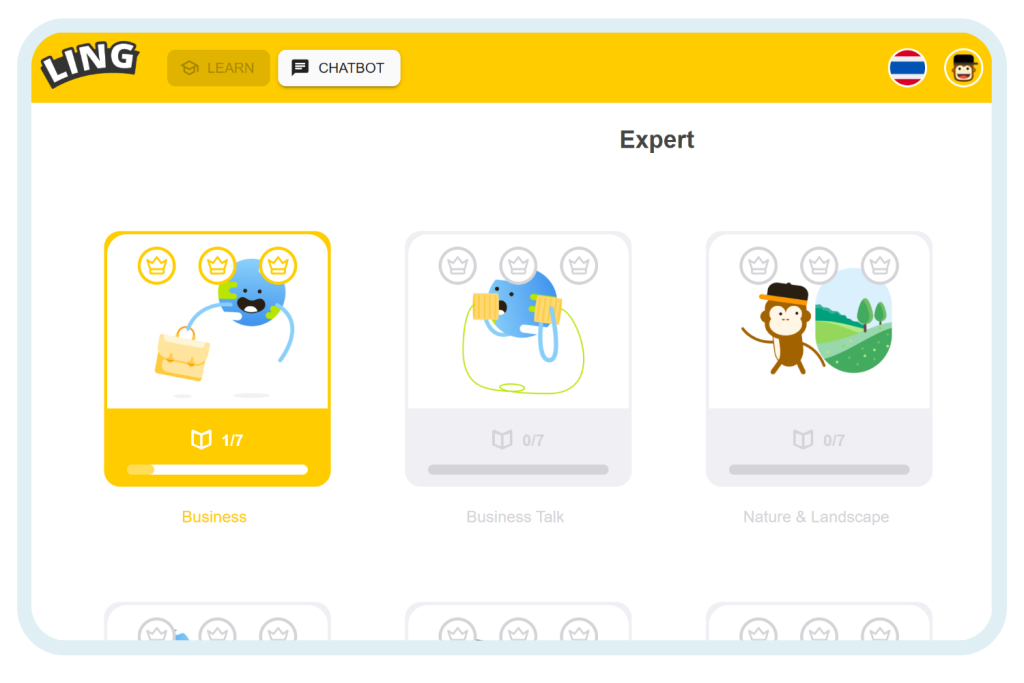
Ling is one of those language learning apps that feels super approachable and fun, but also really effective. I first tried it out when I was looking for something that could give me more variety than Duolingo. What I love about Ling is how it blends gamification with practical, bite-sized lessons.
PROS:
Wide Language Selection: I love that Ling offers a huge variety of languages to choose from, so I can easily switch between different languages or even try out something new.
Voice Recording & Pronunciation Checker: I could record my voice while following the audio and get pronunciation feedback. Speaking activities depend on the course and platform.
Tips and Explanations: Ling provides helpful tips and explanations throughout the lessons.
CONS:
Limited Deep Dive into Grammar: I wanted more detailed grammar explanations in the lessons I tried.
Alphabet Support Varies: Ling now lists writing activities for selected scripts, so check its course and platform feature list if learning a new writing system is your priority.
Microphone Issue: I had an issue with the speaking activity where it stopped detecting my voice and required relaunching.
Languages: Ling’s current website advertises 70+ languages, including a broad range of Asian languages.
Cost: Ling’s web pricing page lists US$16.99 monthly, US$64.99 for six months, and an annual offer of US$89.99. The annual plan includes a 7-day trial; subscriptions renew unless cancelled. You can try two units free. Store prices and offers can differ. Check the refund terms for your purchase channel: Ling’s pricing and help pages currently give different refund windows, and Apple handles App Store refunds.
Writing: 4/5 - Grammar: 3/5 - Reading: 3/5 - Listening: 3/5 - Speaking & Pronunciation: 4/5 - Cultural Insights: 3/5
Bottom line: Ling’s range of languages and pronunciation activities make it worth trying, especially if you want a course outside the smaller catalogs here. The microphone issue in my test was frustrating.
Drops
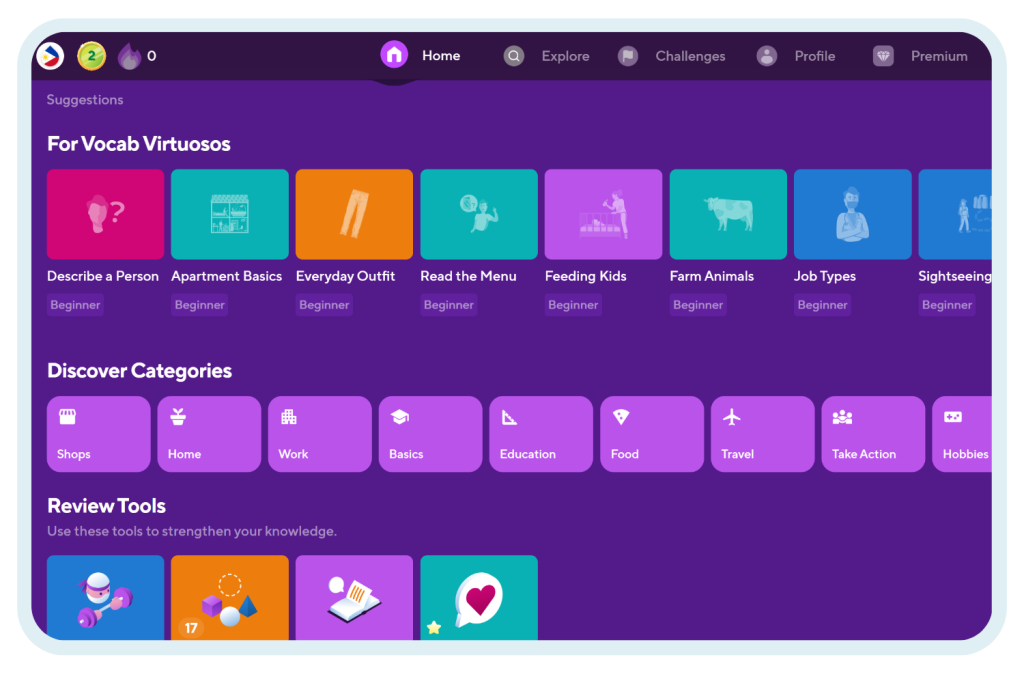
Drops is an incredibly user-friendly language learning app that’s all about making vocabulary acquisition fun and engaging. It uses picture-based exercises to help you associate words with images, making learning feel like a game.
PROS:
Translation Available When You Need It: I could reveal the translation when needed, which let me decide how much help to use.
Free Version is Pretty Good: You can use the app for free with limited daily time.
CONS:
Spelling Activity is Weird Sometimes: I found some of the syllable breakdowns confusing.
Images Don’t Always Match the Words: Some illustrations did not make the intended meaning clear to me.
Languages: Drops advertises 55+ languages. It now offers short grammar activities in selected languages, including French. These practise patterns rather than provide a complete grammar course. Drops retired Speak Practice in March 2026.
Cost: The free plan gives you five minutes every ten hours, with topics unlocked through practice. Premium offers unlimited time through monthly or annual subscriptions, or a one-time lifetime purchase. Prices vary by platform and offer. Eligible 7-day trials become paid annual subscriptions unless cancelled; some web offers charge immediately instead.
Writing: 3/5 - Grammar: 2/5 - Reading: 1/5 - Listening: 4/5 - Speaking & Pronunciation: 1/5 - Cultural Insights: 2/5
Bottom line: Drops remains my pick for visual vocabulary practice. Its newer grammar activities broaden the offering, but I would pair it with conversation practice if speaking is your main goal.
LingoDeer
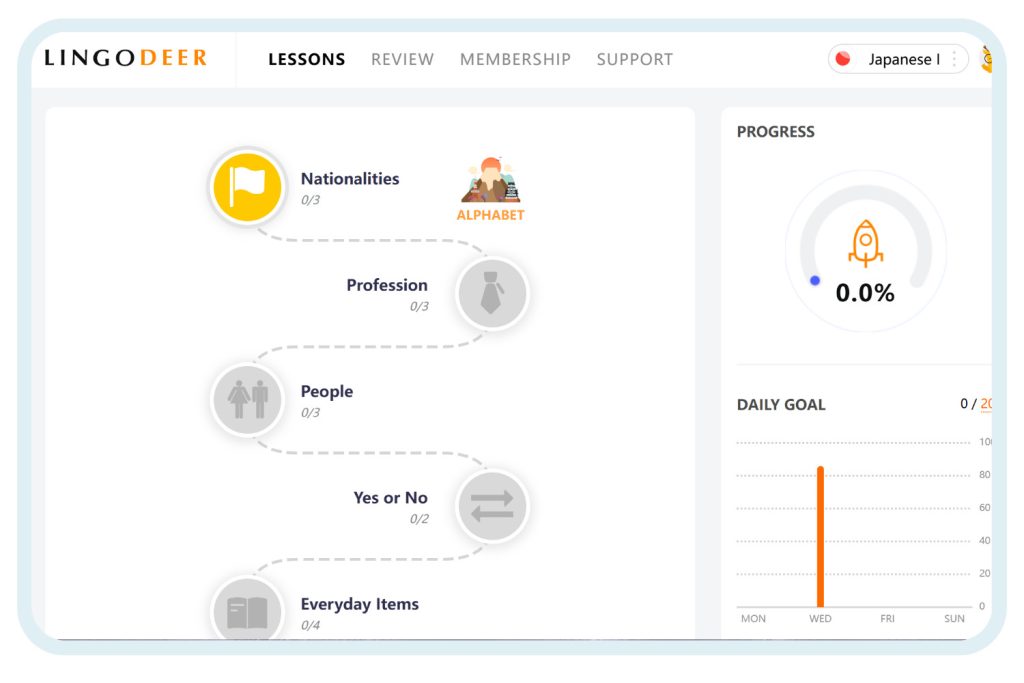
LingoDeer offers a structured curriculum with grammar explanations. LingoDeer Plus is a separate, optional app with extra practice games; you do not need both subscriptions to use the main course.
PROS:
Well-Structured Lessons: The lessons build on each other gradually, starting with basics and moving to complex structures.
Grammar Focus: Places big emphasis on grammar, going deep into sentence structure, conjugations, and grammatical rules.
Offline Mode: Premium includes downloaded lessons in the mobile app for practice without an internet connection.
CONS:
Extra Games Can Cost More: LingoDeer Plus normally needs a separate subscription, though some offers bundle it with LingoDeer. Check what your plan includes if you want the additional games.
My Preferred Fit: I especially like LingoDeer’s approach for learners interested in Chinese, Japanese, or Korean.
Languages: LingoDeer lists 19 languages across 20 courses for English speakers, counting Spanish from Spain and Latin American Spanish separately.
Cost: Free activities include the alphabet, Unit One, Test Outs, the Travel Phrasebook, and the first lesson of the Beginner I and II Fluent courses. The web pricing page lists US$14.99 monthly, US$39.99 quarterly, and a promotional US$95.99 annual subscription. It also lists one-time three-year (US$189.99) and six-year (US$239.99) plans. Those are fixed terms, not lifetime access; store offers can differ.
Writing: 4/5 - Grammar: 5/5 - Reading: 4/5 - Listening: 4/5 - Speaking & Pronunciation: 3/5 - Cultural Insights: 3/5
Bottom line: LingoDeer was my strongest grammar option. I would add conversation practice alongside its structured lessons if speaking more freely is your goal.
Lingo Legend
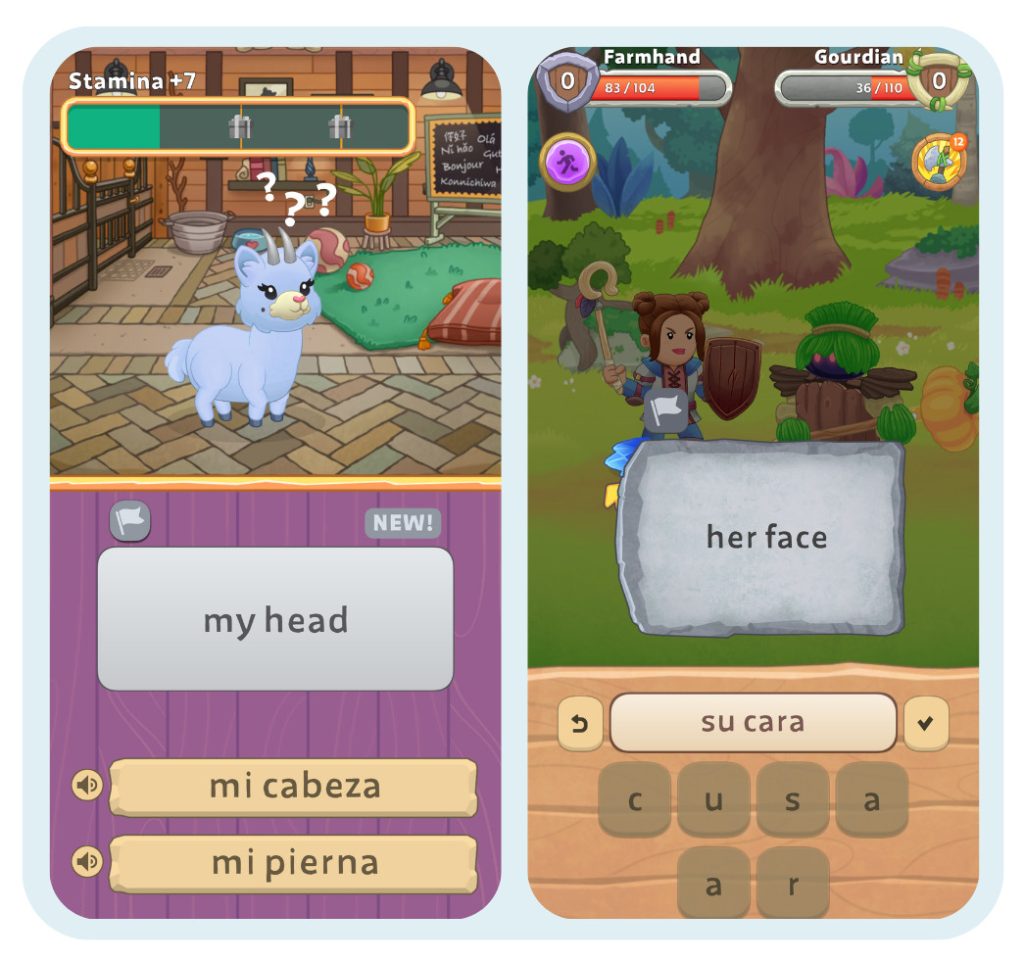
Lingo Legend is a language-learning app that merges adventure game elements with educational content, making it especially appealing to anyone who enjoys gaming or story-driven experiences.
PROS:
Engaging Gamification: The app turns language learning into an adventure game, complete with battles and missions.
Vocabulary Building: Emphasizes vocabulary acquisition with repetition through gameplay.
CONS:
Smaller Language Selection: Its website lists 10 languages, fewer than several alternatives here.
Mobile Focus: The official downloads are for iOS and Android, so it is less convenient if you want to study in a web browser.
Languages: 10 listed on the website. Confirm your chosen course in the app before subscribing.
Cost: There is limited free daily play. The official website lists US$9.99 monthly, US$44.99 for six months, US$69.99 annually, and US$129.99 lifetime. The US App Store also lists a US$19.99 three-month option and different lifetime offers. Recurring subscriptions renew unless cancelled; check the offer available in your app.
Writing: 3.5/5 - Grammar: 3/5 - Reading: 3/5 - Listening: 4/5 - Speaking/Pronunciation: 2/5 - Cultural Insights: 3/5
Bottom line: Lingo Legend turns vocabulary practice into an adventure. I enjoyed the game more than its speaking practice, which is reflected in my scores.
Busuu
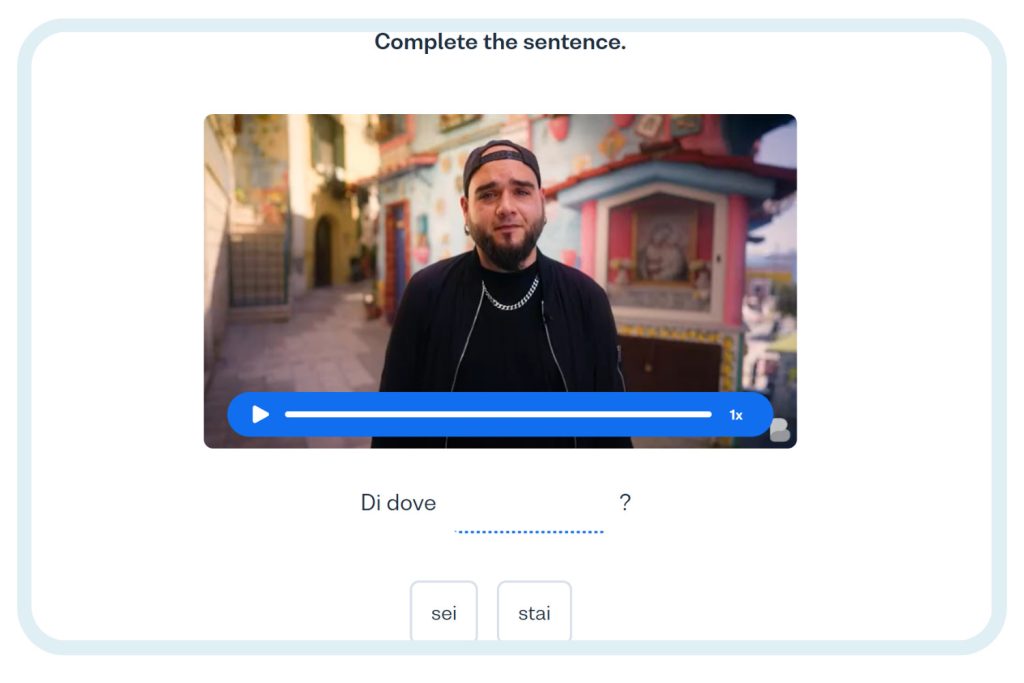
Busuu offers structured lessons and a community where learners can receive corrections from native or fluent speakers.
PROS:
Native-Speaker Videos: Videos let you watch real native and fluent speakers say the words and phrases.
Supportive Learning Community: Share exercises and get feedback from native speakers.
Well-Organized Lessons: I liked the clear progression. Busuu’s French course follows CEFR levels A1 to B2; levels differ between languages.
CONS:
Speaking Needed More Room in My Test: I wanted more conversation alongside the structured lessons. Busuu now offers AI Conversations in supported courses, with limited free tries followed by Premium Plus access on mobile.
Course Depth Varies: Check the levels and features available for your language; the French course is not a template for every Busuu course.
Languages: 14 languages
Price: Busuu has Free, Premium, and Premium Plus tiers. Premium Plus adds AI Conversations and pronunciation feedback where supported. Features differ by language: French speaking exercises offer word-level feedback, while detailed AI explanations are currently limited to English and Spanish. Prices depend on the plan, term, platform, location, and offer shown at checkout.
Writing: 4/5 - Grammar: 3/5 - Reading: 4/5 - Listening: 4/5 - Speaking & Pronunciation: 4/5 - Cultural Insights: 3/5
Bottom line: Busuu is my pick if you want community corrections alongside a structured course. Its current AI features are another option for speaking practice, depending on your language and plan.
Memrise
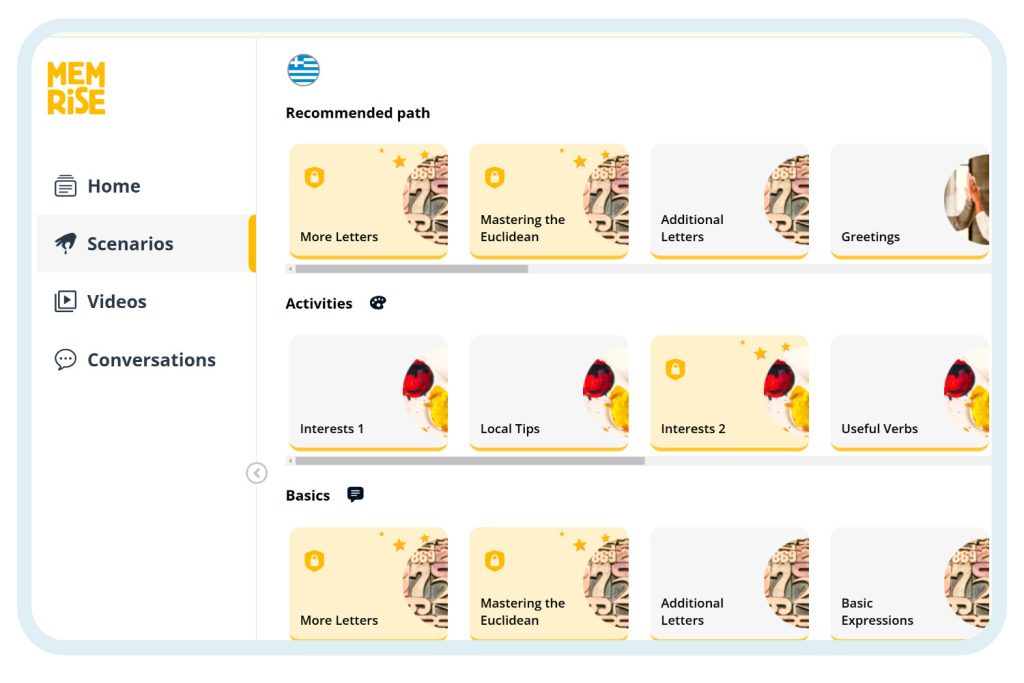
Memrise combines spaced-repetition vocabulary practice with native-speaker videos and AI speaking activities.
PROS:
AI Conversation Practice: Practice speaking with MemBot, Memrise’s AI chatbot, alongside spaced-repetition vocabulary review.
Native Speaker Videos: Lessons include videos of native speakers for authentic learning.
CONS:
I Wanted More Grammar: My original test felt vocabulary-heavy. Memrise now advertises verb and sentence-building practice too, so the old grammar score reflects that earlier experience.
Advanced Content Felt Limited: The material I tried felt too basic for advanced study. Check the topics available for your level before paying.
Languages: Memrise’s current website advertises 149 languages. Course depth, videos, and practice features vary; a large catalog does not mean identical courses.
Cost: The US App Store listing includes US$24.99 monthly, US$61.99 annually, and US$329.99 lifetime, alongside discounted offers. Free access is limited; Pro unlocks additional content and practice. Check your account’s offer and renewal terms rather than assuming a promotional lifetime price is always available.
Writing: 3/5 - Grammar: 2/5 - Reading: 4/5 - Listening: 4/5 - Speaking & Pronunciation: 4/5 - Cultural Insights: 3/5
Bottom line: Memrise’s native-speaker videos are great for training your ear, and it also offers AI speaking practice. I would try its current lessons before deciding whether the grammar support is enough for you.
Mondly
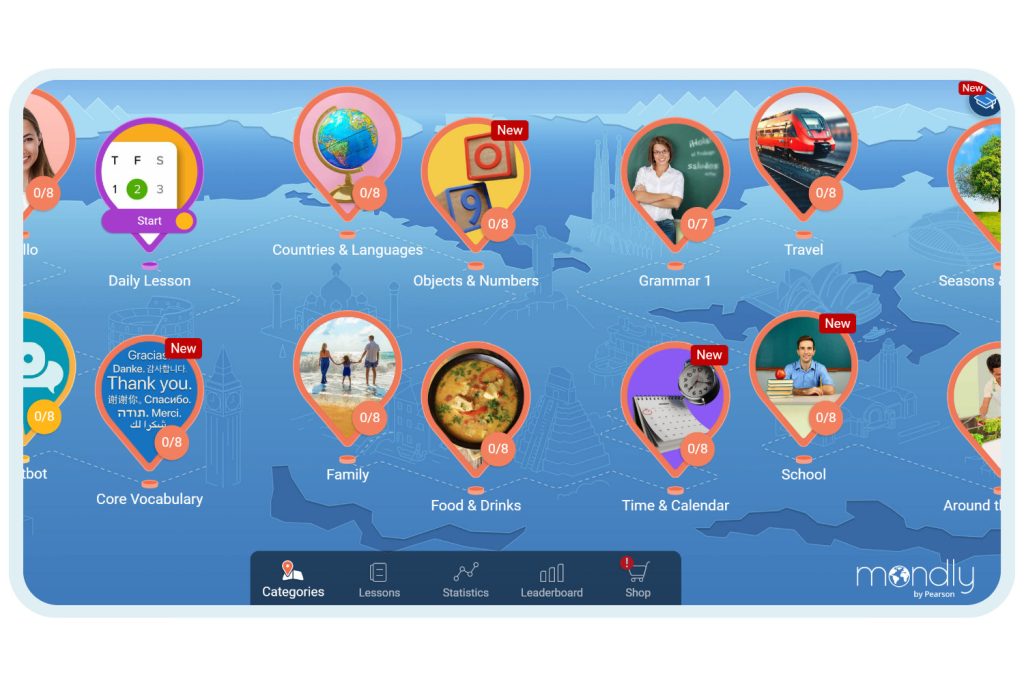
Mondly consists of short, bite-sized lessons designed to touch on essential skills: speaking, listening, and writing. It also has voice recognition.
PROS:
Speech Recognition: The speaking activities felt conversational to me and made answering aloud more comfortable.
Broad Language Selection: Over 40 languages from popular to niche options.
Engaging Activities: Mix of multiple-choice, fill-in-the-blanks, spelling, and sentence-building.
CONS:
Response Limitation in My Test: The chatbot gave me suggested replies, which felt restrictive. Mondly currently markets AI Conversations, so check the conversation format in your course before subscribing.
Limited Translations in My Test: I could see translations of the chatbot’s lines, but not my own replies.
Languages: 41 languages.
Cost: A limited free version is available. The US App Store listing includes US$15.90 monthly and US$74.90 annually among its purchase options. Premium includes access to all lessons and AI Conversations. Trial eligibility, lifetime offers, and prices depend on the offer shown; recurring plans renew unless cancelled.
Writing: 3/5 - Grammar: 4/5 - Reading: 4/5 - Listening: 4/5 - Speaking & Pronunciation: 4/5 - Cultural Insights: 3/5
Bottom line: Mondly offers short lessons and speech recognition across a broad selection of languages. I would test the current conversation activities first, because the suggested replies in my original test felt limiting.
The Verdict: Which Duolingo Alternative Should You Choose?
Here are my picks, with ties made explicit where the review scores were equal.
Best for Specific Skills
-
Grammar: LingoDeer (5/5), the strongest grammar score in my tests.
-
Best for Pronunciation: Copycat Cafe (5/5), for copying dialogue lines with a score and focused feedback when the recording can be assessed.
-
Best for Speaking Practice: Copycat Cafe (5/5), for open AI chat and Call mode alongside structured dialogue lessons.
-
Writing: Busuu, Ling, and LingoDeer all scored 4/5. Busuu adds community corrections.
-
Highly Engaging: Lingo Legend (5/5), for vocabulary practice through adventure gameplay.
-
Listening: Drops, LingoDeer, Lingo Legend, Busuu, Memrise, and Mondly tied at 4/5 in my tests.
-
Reading: LingoDeer, Busuu, Memrise, and Mondly tied at 4/5. LingoDeer remains my preferred choice alongside grammar study.
-
Best for Cultural Insights: Copycat Cafe (5/5), our pick for cultural context through practical dialogue.
The Honest Truth
Gamified language learning apps like Duolingo and these alternatives can definitely make studying feel fun, which is awesome for staying motivated.
What I wanted most was more time answering aloud and using useful phrases. If that is your goal too, choose an app that gives you speaking practice you will actually do, and make room for conversations with people as well.
That focus on speaking is why Benjamin built Copycat Cafe. Its practical dialogues, pronunciation practice, and AI conversation make it worth comparing with the alternatives here.
Your Next Step: Test Before You Commit
My recommendation? Don’t just take my word (or anyone’s word) for it. Actually test 2-3 apps to find what works for your learning style.
Start with your primary goal:
→ “I want focused speaking practice” Start copying: 7 days free with Copycat Cafe, or compare plans first. A payment card is required; your chosen paid plan starts unless you cancel. The 30-day money-back guarantee covers your first payment.
→ “I want fun, gamified practice” Try Duolingo (free) or Lingo Legend (adventure-game style)
→ “I want thorough grammar explanations” Try LingoDeer (especially good for Asian languages)
→ “I want community feedback” Try Busuu (native speakers provide corrections)
→ “I’m learning another language” Try Ling (70+ advertised languages) or Mondly (41). Copycat Cafe teaches French, Spanish from Latin America and Spain, Italian, and German.
Several apps on this list offer a free tier, trial, or refund window, but the terms vary by platform and offer. Check the current checkout before you commit. Good luck with your language learning journey!
Writing about Duolingo and its alternatives? Here’s our honest guide to language learning affiliate programs , which of these apps actually pay creators, and how the commissions compare.
Frequently Asked Questions
What is the best Duolingo alternative for speaking practice?
For focused dialogue, pronunciation feedback, and open AI conversation in French, Spanish, Italian, or German, Copycat Cafe is our pick. Busuu is a good choice for community corrections, while Memrise and Mondly also offer AI speaking activities. Check the features available for your language and plan.
What is the best free alternative to Duolingo?
It depends on your goal. Busuu offers free lessons and community features, Drops allows five minutes every ten hours, and Lingo Legend offers limited daily play. Ling, LingoDeer, and Memrise also offer limited free access. Copycat Cafe offers a seven-day trial requiring a payment card, rather than a permanent free plan.
Which Duolingo alternative is best for grammar?
LingoDeer was the strongest grammar option in my original tests, scoring 5/5. Its structured lessons and explanations suit learners who want to understand sentence patterns. LingoDeer Plus is optional extra practice, not a requirement for the main course.
Which Duolingo alternative has the most languages?
Among these apps, Memrise advertises the largest catalog at 149 languages, with depth and features varying by course. Ling’s current website advertises 70+ languages, Drops 55+, and Mondly 41. Confirm your chosen language and features before subscribing.
Which app is best for learning vocabulary visually?
Drops is my pick for visual vocabulary practice because it connects words with illustrations and keeps sessions short. It now also includes grammar activities in selected languages, including French. I would still add conversation practice if speaking is your main goal.
Which Duolingo alternative is best for Asian languages?
Ling is worth comparing if you want a broad choice of Asian languages. LingoDeer is my pick for structured grammar, especially for learners interested in Japanese, Korean, or Chinese. Check the writing and speaking activities available in your chosen course.
Do these Duolingo alternatives include AI conversation practice?
Yes. Copycat Cafe offers open AI chat and Call mode. Busuu offers AI Conversations in supported courses, with limited free tries followed by Premium Plus access on mobile. Memrise and Mondly also offer AI speaking activities. These differ from guided dialogue exercises and vocabulary games.
How current are the prices in this comparison?
We checked current features, pricing, and access terms against official sources on September 30, 2026. Prices shown may vary by country, platform, and offer. Confirm the total charge and renewal terms at checkout.